— and It’s About Time—
For years, residents along Pensacola and Perdido Bays have asked a simple question: Is the water safe? Safe to swim in, safe to fish, safe for our kids and grandkids. Now, thanks to a $750,000 grant from the EPA’s Gulf Program, the Pensacola and Perdido Bays Estuary Program is building a system to finally give us consistent, reliable answers.
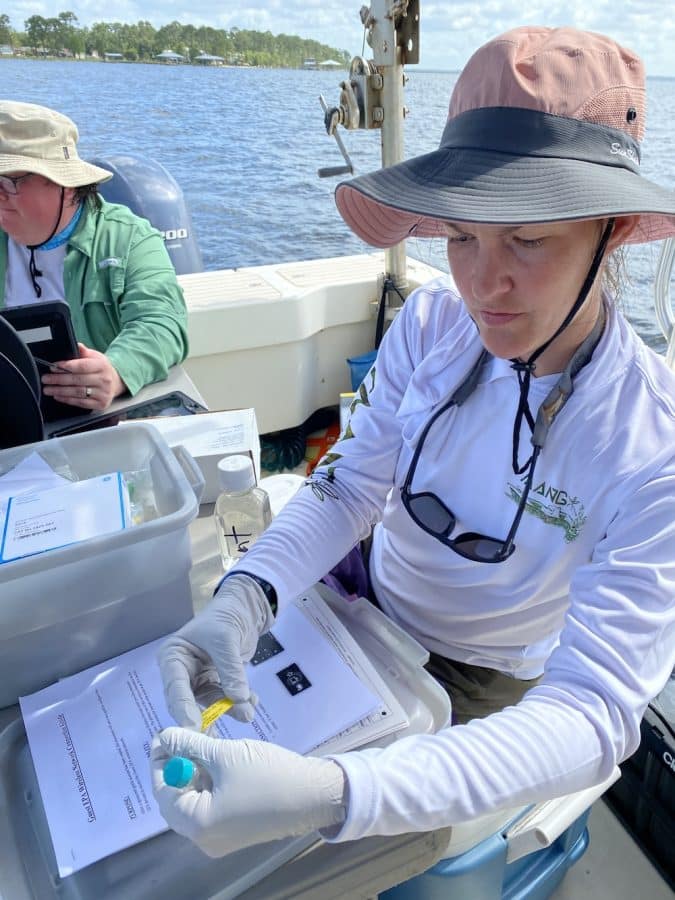
Details: The grant will fund a Water Quality Monitoring Collaborative, a network of roughly 30 sentinel monitoring sites spread across both watersheds. Over the next three years, teams will collect monthly data on nutrients and bacteria levels, key indicators that tell us whether our waterways are healthy or headed in the wrong direction.
- What makes this effort different from past monitoring is standardization. Right now, multiple agencies and jurisdictions track water quality using different methods, different parameters, and different timelines. That patchwork approach makes it nearly impossible to compare data across the region or identify trends over time.
- The collaborative will change that by aligning how monitoring is done with the help of Escambia, Santa Rosa, and Okaloosa counties, the City of Orange Beach, and the Poarch Band of Creek Indians.
Why this matters: The data won’t just sit in a file cabinet. PPBEP plans to feed the results into its biennial State of the Bays Report and launch a water quality dashboard. The public can check conditions on their favorite waterways without deciphering a technical report.
- More importantly, the data will drive a water quality improvement action plan with a straightforward goal: making our waters swimmable and fishable.
Background: This collaborative grew out of PPBEP’s first Comprehensive Conservation and Management Plan, which identified coordinated monitoring as a priority action. Senior Scientist Whitney Scheffel said the effort came together because regional partners recognized they needed to stop working in silos.
For more information, visit ppbep.org.