Sea turtle nesting season officially kicked off today, May 1, with Escambia County Sea Turtle Conservation Program volunteers beginning their daily morning patrols on Pensacola Beach and Perdido Key. These dedicated volunteers start at first light to maximize their chances of spotting tracks, nests, and other turtle activity before they’re obscured by footprints, wind, and waves.
- Throughout the season, which runs through September (with some late-season nests potentially hatching into October), volunteers and staff will monitor nests during their incubation period and remain ready to assist with strandings and other turtle-related incidents.
Local Sea Turtle Species
Four species of sea turtles nest in Escambia County. Loggerhead and green sea turtles are the most common nesters, with Kemp’s ridley and leatherback turtles appearing less frequently. Female turtles come ashore through early summer and may nest multiple times in a single season.
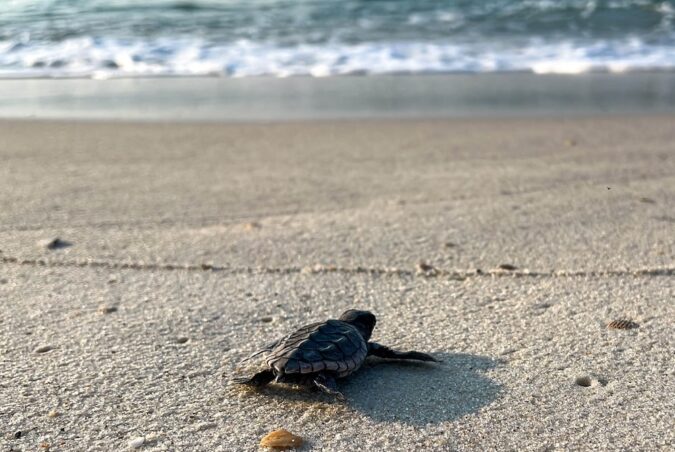
After approximately 60 days of incubation, hatchlings emerge together under the cover of darkness and race to the water. These tiny turtles make their way to open water with fewer predators. After several years of growth, they return to the area as juveniles and sub-adults, continuing to develop until they’re mature enough to mate and nest.
Juvenile and adult sea turtles can often be spotted foraging in local bays and sounds, including near fishing piers and artificial reefs.
Sharing the Beach with Shorebirds
Sea turtles aren’t the only summer visitors to our beaches. Several shorebird species also nest during these months, including least terns, snowy plovers, and black skimmers. Their nests are shallow depressions in the sand containing small, well-camouflaged eggs that incubate for up to 30 days before hatching into small, fluffy chicks.
Adult birds typically sit on both eggs and newly hatched chicks to protect them from predators and the intense Florida sun. With summer being a busy tourist season, large crowds can significantly impact these coastal wildlife populations.
How You Can Help Protect Our Coastal Wildlife
Lights Out
Bright lights can disturb nesting sea turtles and disorient both adults and hatchlings on the beach. When visiting after dark, keep cell phones and flashlights off or use a red flashlight instead. If you own beachfront property, turn off exterior lights when not in use and keep blinds and curtains closed after sunset.
Leave Only Footprints
Help maintain obstacle-free beaches for nesting and hatchling turtles by removing all personal items—including chairs, tents, umbrellas, toys, and water equipment—from the beach by sunset daily. Also, remember to fill in any holes and flatten sandcastles before leaving.
Share the Beach Responsibly
Stay away from posted nesting areas and avoid setting up near marked areas. Give resting birds their space, and if you encounter a nesting sea turtle, maintain a respectful distance. Never handle sea turtle or shorebird eggs and hatchlings.
- Dogs are only permitted in designated beach dog parks and must always be leashed.
Reporting Wildlife Emergencies: If you encounter dead or injured sea turtles or marine life, report it immediately to Escambia County Marine Resources (850-281-5904) or the FWC Wildlife Alert line (1-888-404-FWCC).
For more information, visit MyEscambia.com/seaturtles or follow the Escambia County Natural Resources Management Department on social media.
PODCAST
On “(we don’t) Color On the Dog,” I interviewed author Jim McClellan about his new children’s book, “Starla.”
The book follows a female sea turtle returning to shore for her first nesting experience and the challenges she faces due to human activities on the beach.
Jim explains how the book gently introduces children to sea turtle conservation concepts and encourages responsible beach behavior like filling in holes and taking toys home.
Two dollars from each book sale will support ?See Turtles?, an organization that provides grants to sea turtle patrols worldwide and runs the “billion baby turtles” conservation effort. To buy a book, visit https://www.starlaproject.com.