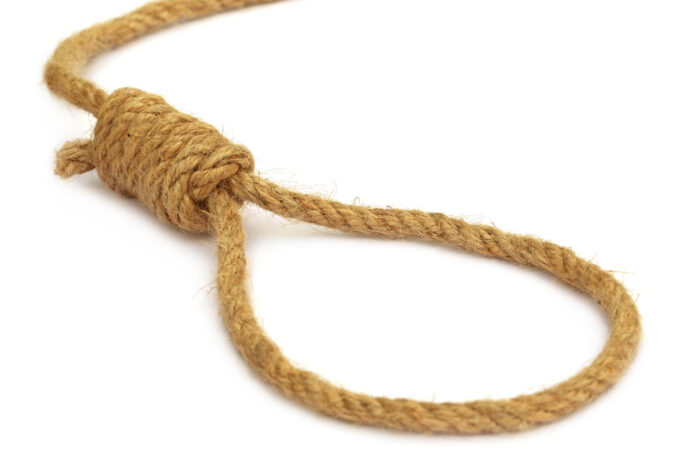
In April 2012, the University of West Florida campus experienced disturbing hate crimes that shook the community and challenged the school’s dedication to fighting racism.
- Nooses—symbols with a dark history tied to America’s legacy of racial violence—were found on campus, prompting quick action from university leaders and sparking essential discussions about racism in higher education.
The Timeline of Terror
On Wednesday, April 11, 2012, a female student discovered a noose hanging from a tree behind Martin Hall, positioned about three feet off the ground in a parking lot area. On Saturday, April 14, the day of the annual awards gala of the UWF African American Student Association, Vice President of Student Affairs Dr. Kevin Bailey notified residential students.
Then on Monday, April 16, a second noose was found over a campus map sign at the tennis courts in parking lot J. We interviewed UWF Police Chief John Warren.
- “This is all new for us,” Chief Warren admitted, acknowledging that campus police weren’t used to handling such obvious symbols of racial intimidation. The department immediately started investigating both incidents as hate crimes.
UWF President Judy Bense sent a campus-wide email after the second noose appeared. She called the acts “repugnant to University ideals” and promised that those responsible would face both criminal prosecution and university disciplinary action, including potential expulsion.
The university increased police patrols and established anonymous reporting channels. Resources were made available to the campus community, including 24-hour police escorts, counseling services, and support from the Office of Inclusion Programs and Services.
Community Dialogue
President Bense used an April 18 student forum—organized initially to discuss the Trayvon Martin shooting—to address the hate crimes directly.
- “I’m not a happy camper,” Bense told the crowd of about 100 students, faculty and community leaders. “I care about this university and each and every one of you.”
In the crowd was the “old guard” of civil rights leaders: Rev. H. K. Matthews, Dr. Calvin Avant (Pensacola-Escambia Human Relations Commission), Elvin McCorvey (NAACP), Ellison Bennett (SCLC) and Jerry McIntosh (Movement for Change).
Lumon May, who was running for Escambia County Commission, also attended. Rev. Lonnie Wesley, pastor of Greater Little Rock Baptist Church, Rev. LuTimothy May, pastor of Friendship Missionary Baptist Church, and Rev. Joseph Marshall, pastor of St. John Divine Baptist Church, joined him. All four men had been working with students. Lumon May was president of the Black Student Union when he was a student at UWF.
- “We are not trying to push this under the rug,” Bense assured the community. “We will talk about this more than ever.”
Bense said that UWF should be a neutral territory that is inclusive and free of harassment. “These are our bedrock values,” said Bense. “We must protect them and pay attention to them. I work on it every day to make sure we have an environment free of harassment of any kind.”
- She said that the nooses were deplorable acts. “I hate it,” she said, assuring the students that the university is actively investigating the crimes. She pledged her full support to the investigators. “Anything they need, they’ve got.”
Bense announced the formation of the Presidential Policy Council on Diversity. The council would meet regularly with her to discuss policies and keep her informed of diversity issues on campus.
A Test of Values
The April 2012 noose incidents at UWF revealed both the persistence of racial hatred and the power of institutional leadership to confront it directly. While the perpetrators were never publicly identified, the university’s response demonstrated a commitment to its stated values of inclusion and respect.
- The crisis became a catalyst for deeper conversations about diversity and the ongoing work required to create truly inclusive campus environments. The effort helped change attitudes in the Black community, which often joked that “UWF” stood for “University for White Folks.”




Ross,
The article details the incidents that led to former UWF president Judy Bense (Martha Saunders’ predecessor) to establish a council on diversity, which ultimately led to the creation of the Office of Equity and Diversity. This also led to the inclusion of the focus on diversity, equity, and inclusion in the university’s strategic plan (although the FL Board of Governors had also indicated a desire for such a focus from all universities in its system, until such an emphasis fell out of political favor).
All of the above led to former president Martha Saunders being harangued by her new BOT so that she would quit, and led to the installation of the vastly underqualified “interim” president MR. Manny Diaz.
X
Ross,
I publish a history article on weekends.
-Rick
Why publish this now? Did something else come to light from the story, or was there a new incident?