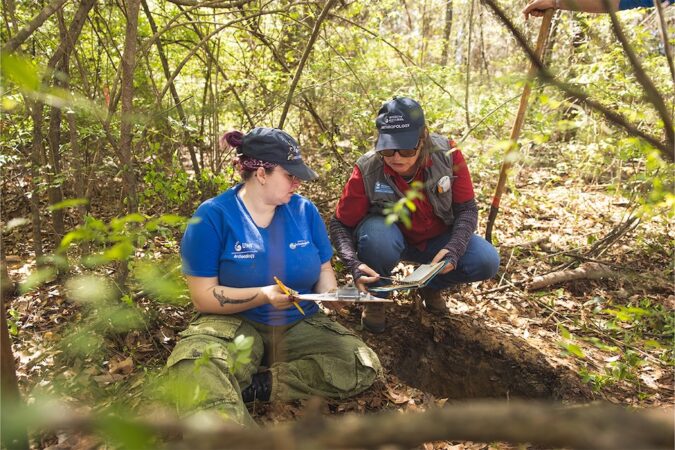
Researchers at the University of West Florida have made a remarkable discovery beneath their own campus—uncovering artifacts tied to multiple pre-Columbian Native American cultures during an archaeological survey connected to stadium construction planning.
What They Found
The UWF Archaeology Institute has relocated a site first documented on campus in 1989, recovering ceramics linked to at least two distinct cultural periods. The oldest pieces connect to the Weeden Island culture of the Woodland period, dating approximately A.D. 600 to 900. A second set of ceramics points to the middle-to-late Mississippian period, roughly A.D. 1250 to 1600.
That the site survived centuries of campus development in relatively good shape surprised even the researchers leading the work.
- “The condition of the site is significant due in part to the long history of development of our campus,” said Ramie Gougeon, director of the Archaeology Institute. “It is not common to find a site this intact. I am particularly excited to learn more about the different activities past peoples engaged in at this location.”
Why the Survey Was Required
The excavations are part of UWF’s preparation for infrastructure improvements tied to the construction of Darrell Gooden Stadium. Under Florida law, any project involving ground disturbance on state-owned land must be reviewed by the Division of Historical Resources within the Florida Department of State. After evaluating the stadium plans, the division required an archaeological survey before construction could move forward.
- Football Stadium Still Going Up: Gougeon emphasized that the findings won’t derail the broader project. “The survey demonstrates UWF’s commitment to responsible development and cultural resource preservation,” he said. “While our findings and follow-up work affect the timing of some activities, the investigation of this archaeological site will not negatively impact the current stadium infrastructure plans.”
Beyond compliance, the project is giving UWF anthropology and archaeology students direct field experience—conducting shovel tests, screening soil and documenting artifacts alongside faculty researchers.
- “Archaeology is a hands-on profession, so any chance that we can give our students to have additional time working in the field is valuable,” said Jennifer Melcher, senior faculty research associate with the UWF Archaeology Institute. “Having projects right here on campus means they can easily join us after classes and add that experience to their resumes.”
UWF archaeologists have been studying campus sites since the late 1980s. Additional survey projects are expected to continue throughout the spring. For more information about the UWF Archaeology Institute, visit uwf.edu/archaeology.