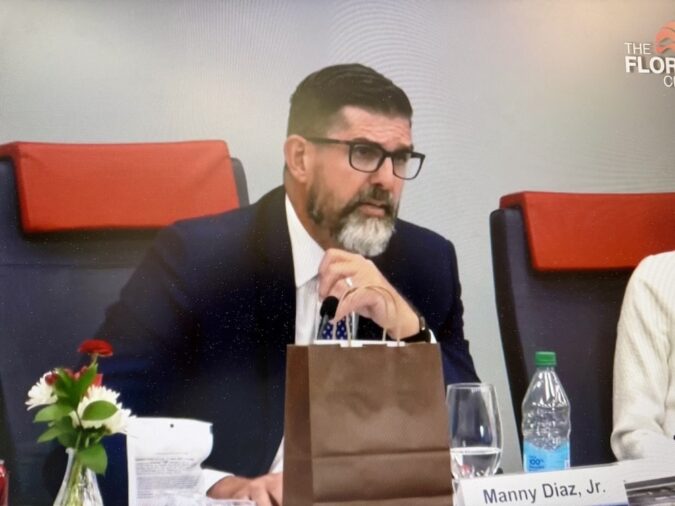
The Florida Board of Governors voted to confirm former Education Commissioner Manny Diaz Jr. as interim president of the University of West Florida on June 18, but not without significant debate over the structure of his contract and concerns about the upcoming presidential search process.
Matthews Defends Diaz
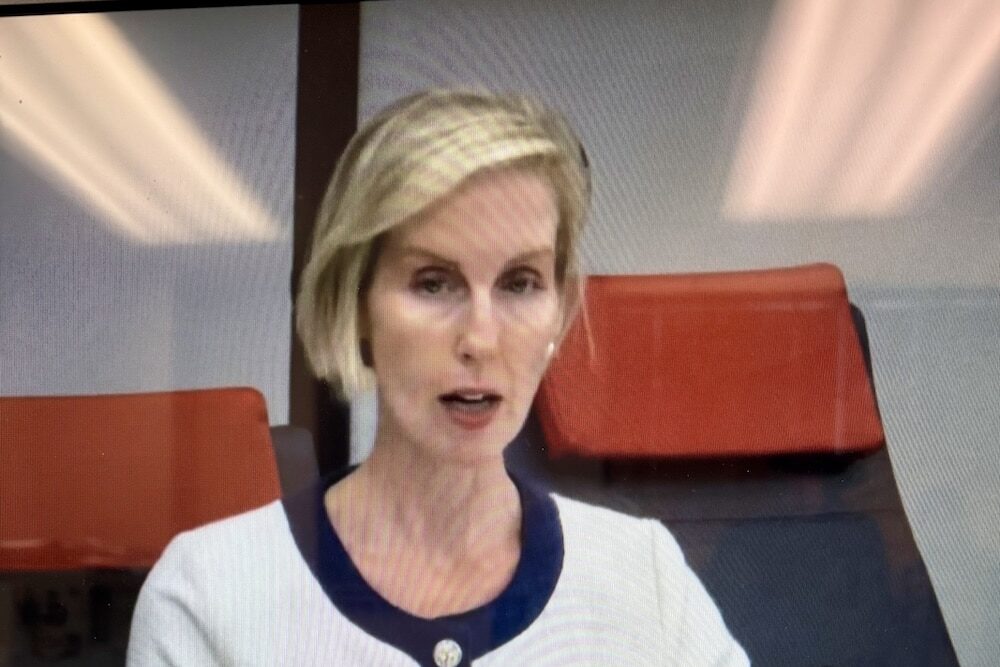
Diaz will step into the role effective July 14, following the resignation of President Martha Saunders, who led UWF to impressive performance metrics during her tenure. As UWF Board Chair Rebecca Matthews noted during the meeting, Saunders “made a lasting impression on the university and the community” and will continue serving as President Emeritus and teacher in the School of Communications.
Matthews provided detailed reasoning for selecting Diaz, emphasizing the situation’s urgency and his qualifications. “With President Saunders’ resignation came an immediate need for our board to consider an interim leader for the university. Furthermore, it was paramount to have an interim installed before the beginning of the new school year.”
She shared his resume and added why Diaz is the best fit for the university: “UWF needs a leader who embraces its solid foundation and takes it to new heights. Someone with a student-centered focus for quality education that not only instills knowledge for the degree the student is seeking but preparing them for the workforce.”
She detailed additional priorities: “Someone who can fundraise and obtain additional operational support, someone who can guide expanded research in areas of cybersecurity, AI, the sciences, and further collaborate with the military on educational opportunities. And lastly, someone to place further focus on our athletics, the build of our UWF football stadium, which will be a robust economic driver to the community.”
Matthews concluded her case by stating: “After thoughtful consideration, it was clear Manny Diaz Jr. would be the best leader for UWF at this time.”
Background
The selection of Diaz was not surprising given his extensive background in Florida education and his connections to Gov. Ron DeSantis.
His 30-year career spanning K-12, colleges, and the state university system started as a teacher and administrator before moving to chief operating officer at Doral College, served in both the Florida House and Senate, and was appointed as Florida’s Education Commissioner by Governor Ron DeSantis in 2022.
However, Diaz is the first UWF president without a doctorate.
Doral College was established in 2011 by Fernando Zulueta, CEO of Academica—an organization managing over 200 charter schools in 12 states. Diaz was hired in 2013 after he was elected to the Florida House and became a champion for charter schools.
Matthews did not consider anyone else to be the interim president.
Contract Controversy Takes Center Stage
However, the confirmation process became contentious when Board of Governors member Eric Silagy raised detailed concerns about Diaz’s interim contract structure. Silagy’s line of questioning revealed several issues distinguishing this agreement from typical university president contracts.
The most significant concern centered on the elimination of performance-based compensation. While outgoing President Saunders had a base salary of $536,000 with an at-risk bonus structure of up to 20%, Diaz’s contract features a higher base salary of $643,000 with no performance incentives.
- “I’m just a big believer that everybody should have some pay at risk when you’re at these levels,” Silagy argued. “When you’re at these kind of very senior CEO levels, best practices is that a portion of that is at risk for non-performance.”
Silagy’s concerns extended beyond compensation structure to broader questions about succession planning. Given her strong performance record and institutional knowledge, he questioned whether UWF had adequately explored keeping Saunders on as interim president during a search process.
Perhaps most troubling to Silagy was a clause in the contract stating that “in the event of a failed search for a university president, this agreement may be extended.” He argued this provision could signal an expectation of search failure and might discourage qualified candidates from applying.
- “Any candidate who looks at this is going to say there’s a relocation package which the university’s paying for somebody to Pensacola. There is no performance metric on this. And on top of that, there’s a clause that anticipates failure,” Silagy said. “I’m afraid that’s going to chill significantly the interest from really highly qualified candidates.”
Confirmation
When pressed to modify the contract terms, Chair Matthews declined, stating that her board had reviewed and was comfortable with the agreement as structured. She confirmed that a robust presidential search is already underway and will begin in the coming weeks to months.
- Note: Matthews did not mention the concerns that UWF trustees Alonzie Scott and Susan James brought up about the contract.
Despite the lengthy debate, the Board of Governors ultimately voted to confirm Diaz, with only Silagy in opposition. Notably, Diaz properly recused himself from the vote due to his position as a current ex-officio member of the Board of Governors as Education Commissioner.
Diaz’s Vision and Approach
When asked directly about his interest in the permanent position, Diaz was straightforward: “Would I be interested in pursuing the permanent presidency? Yes.”
- Addressing concerns about following in the footsteps of a successful predecessor, Diaz drew from his own experience: “I’m used to following in big shoes. I had to follow Commissioner Richard Corcoran into the commissioner’s seat after great success in Florida and the Department of Education in our colleges in K-12.”
On building relationships with faculty, Diaz emphasized his hands-on leadership style: “I’ve always led by walking around, as I called it, from the time I was as an administrator at a school site K 12 system, to the time that I walked into the State Department of Education used to walking down every floor and speaking to every employee that I could.”
- He stressed the importance of open dialogue: “I think it’s important to communicate. I think it’s important to have an open line of communication, and I think it’s important to recognize we’re not always going to agree, but if we get that out of the way upfront and understand that we agree, we’re going to continue to communicate beside that, I think we can continue to build upon the successes that are already there.”
Regarding his management philosophy, Diaz said, “There’s no reason to make change for the sake of change. There has to be a conversation, there has to be an evaluation. And at the end of the day, my intention is to put students first. And I think that’s what the faculty wants at the end of the day.”
- The new interim president faces the challenge of maintaining UWF’s strong performance trajectory while navigating a presidential search process that has already generated controversy before it begins. As Governor Kimberly Dunn noted, his success in building trust with faculty and stakeholders will be crucial given UWF’s current high-performing status.
Looking Forward
Whether the contract structure concerns raised during confirmation will ultimately impact the presidential search remains to be seen. What’s clear is that all eyes will be on both Diaz’s interim performance and the university’s ability to attract top-tier candidates for the permanent position.
- The confirmation marks another significant transition in Florida’s higher education landscape, with implications extending well beyond Pensacola’s UWF campus.
- These quotes may come back to haunt Matthews and Diaz…which is why I report them.