

Frustrations mount as commissioners and the clerk’s office clash over Clerk Pam Childers’ new community support fund requirements.

What should have been a routine approval of a $500 payment to the American Legion Post 33 turned into a heated 30-minute debate at the July 10 Escambia County Commission meeting, highlighting growing tensions between the Board of County Commissioners and Clerk Pam Childers’ office over community support funding policies.
The Heart of the Dispute
The controversy centered on a previously approved expenditure to sponsor two high school students to attend a week-long Boys State program at Florida State University in Tallahassee. Commission Chair Mike Kohler had championed the request, which the board had already approved months earlier. However, after implementing new community support fund policies, the clerk’s office sent the payment back for additional review.
- Childers didn’t attend the meeting. Her in-house attorney, Cody Leigh, outlined three new requirements the clerk would scrutinize: a clearly identified “county public purpose” (as opposed to state, school, or private purposes), ensuring that public purpose is primary rather than incidental, and adequate controls to ensure the public purpose is carried out when paying non-governmental entities.


Commissioners Express Mounting Frustration
Chair Kohler’s frustration was palpable throughout the discussion. “If y’all aren’t going to approve anything, just put it on the record so we know which way to go,” he said. “It’s not fair to these agencies that believe that we’re going to help them and run them around.”

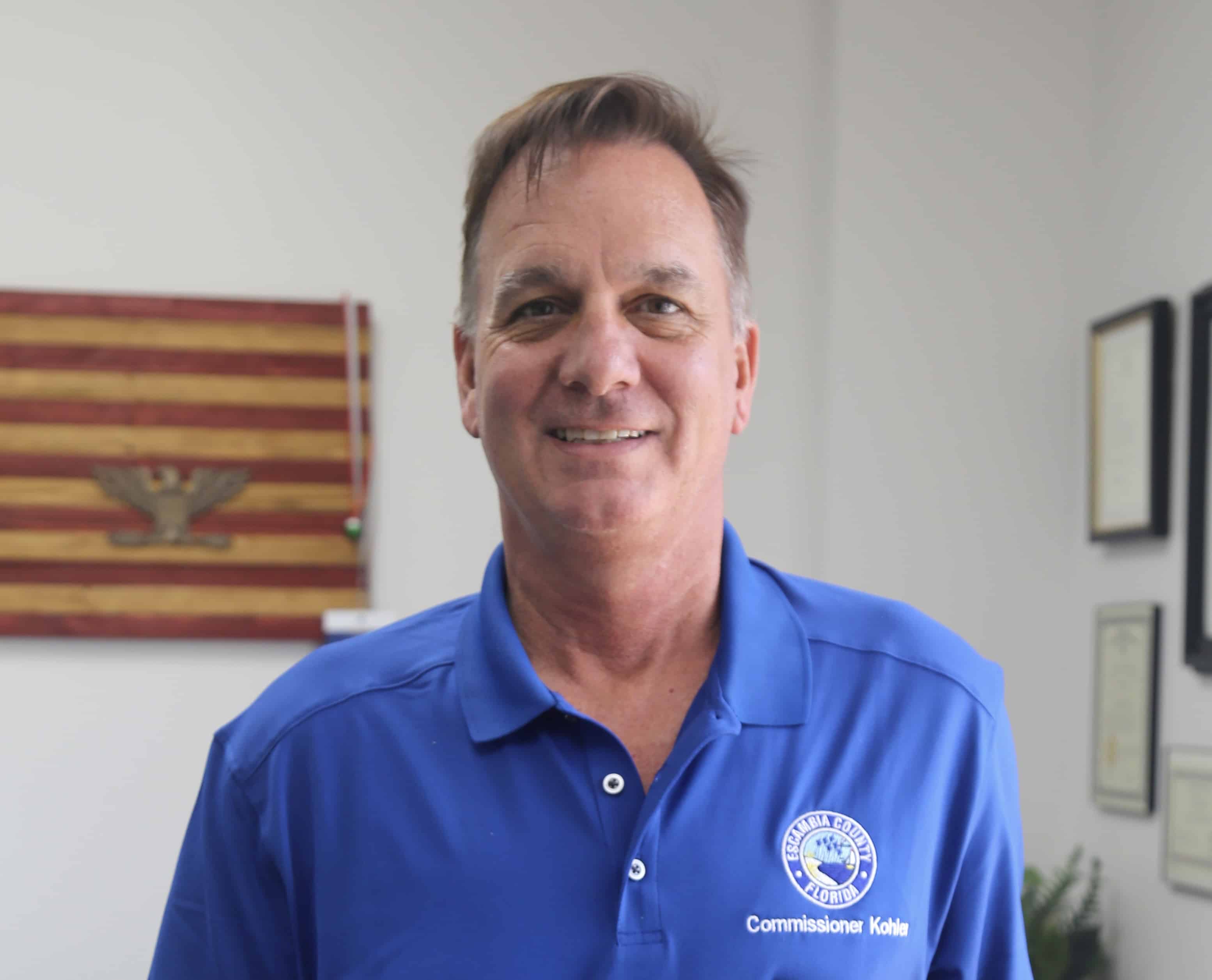
- The chair noted that Escambia County has become “a complete and utter outlier” compared to other Florida counties in their restrictive approach to community support funding.
He pointed out that the students had already attended the program, the county had approved it before, and all necessary documentation appeared to be present.
Commissioner Steven Barry questioned the distinction between “public purpose” and “county public purpose,” calling it a “made-up difference” that hadn’t been previously communicated. Commissioner Lumon May expressed bewilderment at the situation, noting the irony of debating a $500 expenditure when the county has “a billion-dollar budget almost.”
-
- “We’ve had $500 worth of conversation,” May observed. “It’s about $10,000 sitting in here for the last 10 hours. We could have given a lot of children money. It’s ridiculous.”
The dispute reveals deeper issues with Escambia County’s community support fund policies. Commissioner Ashlee Hofberger requested a “yes/no list” of previous years’ approvals to provide clearer guidance, while commissioners struggled to understand what constitutes acceptable public purposes.
May highlighted what he saw as inconsistencies, questioning why the county could provide food for well-paid employees but faced restrictions on helping underprivileged children.

Administrative vs. Legislative Authority
The discussion took a constitutional turn when County Attorney Alison Rogers weighed in, arguing that determining public purpose is fundamentally a legislative decision for the commission, not an administrative one for the clerk’s office. This represents a classic separation of powers issue.
- “What serves the public purpose is not the counsel to the clerk’s decision to make,” Rogers stated. “You guys are the ones who are supposed to decide what serves a public purpose, and you have very broad discretion to make that legislative finding.”
Clerk’s attorney Leigh respectfully disagreed, maintaining that while the counsel doesn’t make the decision, “the clerk’s office does.”
Moving Forward
Despite the heated exchange, the commission ultimately approved the American Legion payment by a 5-0 vote, though Commissioner May predicted it still wouldn’t be paid. Chair Kohler made clear his expectation that if administrative issues exist (such as a missing signature), the clerk’s office should work collaboratively to resolve them rather than creating roadblocks.
- The meeting highlighted the need for clearer communication and collaboration between the constitutional officers. While both sides expressed commitment to following proper procedures, the current system appears to be creating more frustration than clarity.
As Chair Kohler noted, “We’re either going to have community support funds or we’re not.”
- The county needs to resolve these fundamental questions about the scope and implementation of community support funding to avoid continued conflicts over what should be straightforward civic assistance programs.