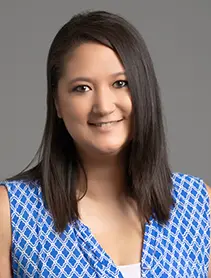
In a contentious move at Thursday’s University of West Florida Board of Trustees meeting, newly appointed trustee Zack (The Heritage Hack) Smith successfully tabled the tenure application of Dr. Chrystina Hoffman, Assistant Professor in Criminology, Criminal Justice, and Legal Studies.
- The decision came despite Dr. Hoffman completing the entire tenure review process and receiving administrative recommendations for approval.
The Central Concern
What began as a routine approval of tenure for 10 faculty members became divisive when Smith raised procedural concerns about Dr. Hoffman’s application. When pressed by Trustee Alonzie Scott, Smith revealed his primary objection:
“The majority of her own department members who voted said they did not favor granting her tenure. And so to me at least that’s a red flag that I’d like a little more information about.”
Smith emphasized his concerns were procedural, not content-based: “My question today doesn’t involve the content of any of the scholarship involved with Dr. Hoffman… My question today relates to the process.”
Dig Deeper: Smith also serves on the Pensacola State College Board of Trustees and has wreaked similar havoc there. I suspect “The Hack” is upset with Hoffman’s publications:
- Hoffman, C. Y., & Daigle, L. E. (2019). Racial and ethnic differences in risk factors for bully victimization. Journal of Ethnicity in Criminal Justice.
- Daigle, L. E., & Hoffman, C. Y. (2018). Violent victimization and future expectations: Results from a longitudinal study of at-risk youth. Victims & Offenders.
- Daigle, L. E., Hoffman, C. Y., & Johnson, L. M. (2018). The extent and risk of violent victimization among international college students enrolled in the United States: A gendered analysis. Journal of Interpersonal Violence.
- Hoffman, C. Y., Phillips, M. D., Daigle, L. E., & Turner, M. G. (2017). Adult consequences of repeat bully victimizations: Are children or adolescents more vulnerable to the victimization experience? Youth Violence & Juvenile Justice.
Faculty Support
Faculty Senate President and Trustee Susan James delivered an impassioned defense, confirming that Dr. Hoffman had exceeded requirements: “When you look at the bylaws of her department, you will see that she has not only met them, but in many areas exceeded.”
James emphasized the rigorous nature of tenure review, involving multiple evaluation layers including departmental assessment, college council review, and university personnel committee evaluation with “a large membership from every college and discipline.”
She also highlighted the personal impact: “I think we need to think about being humane to people that have worked very hard… these people have worked their entire lives to get to this point. And then they’re sitting on eggshells.”
Process Questions
Before the tenure discussion, United Faculty of Florida chief negotiator Dr. Jonathan Fink addressed contractual requirements, emphasizing that:
- Tenure decisions must be based on “established criteria specified in writing”
- Only documents “contained or referenced in the tenure file” may be considered
- The collective bargaining agreement includes specific timeline requirements
Provost Jaromy Kuhl noted that faculty members have opportunities to provide rebuttals to negative departmental votes, suggesting Dr. Hoffman’s file includes her response to any concerns.
Board Divided
Trustee Alonzie Scott strongly opposed the move: “If they say to me, Mr. Scott, hey, we think this person deserves to be tenured professor… I’m going based on their judgment, mostly because I trust that they are making the best decision for the university and for us to cherry-pick things out of a package because we have certain beliefs. That to me is unacceptable, how we should run this board.”
Academic Affairs Committee Chair Adam Kissel (who works for the Heritage Foundation like Smith), while initially recommending approval for all candidates, supported additional scrutiny, noting tenure represents “a lifetime contract with someone basically,” requiring “important fiduciary duty.”
The Vote
The board ultimately split the decision into two votes: approving tenure for nine faculty members (which passed) and tabling Dr. Hoffman’s application until the next meeting. General Counsel Susan Woolf confirmed the board’s legal authority to review each candidate individually, though questions remain about the implications of delaying a decision when established criteria have been met.
Broader Context
This tension occurs within significant changes to UWF’s governance, with eight new trustees appointed by Gov. Ron DeSantis.
The decision to single out Dr. Hoffman’s application—particularly when she allegedly exceeded departmental requirements—raises questions about whether this represents a new approach to tenure decisions at UWF, moving from deference to faculty expertise toward more activist board oversight.
Return of the New College Playbook
At New College of Florida, Professor Hugo Viera-Vargas was denied tenure in 2024 despite meeting all established criteria and receiving recommendations from faculty committees, the provost, and initially the interim president.
- The denial came solely from President Richard Corcoran, who focused exclusively on “quantitative metrics” (class enrollment numbers) while dismissing qualitative achievements.
Crucially, when faculty member Amy Reid investigated the data, she discovered errors in the calculations and found that co-taught classes were excluded from consideration. When properly calculated, Viera-Vargas actually performed “in the third quartile” of faculty metrics—contradicting the president’s stated rationale.
Parallels to the UWF Hoffman Case
The similarities are striking:
- Process Disruption: Both cases involve departing from established tenure review processes where candidates had met departmental and administrative requirements.
- Selective Focus: At New College, President Corcoran, who serves Education Commissioner before Interim UWF President Manny Diaz Jr., ignored qualitative metrics and focused only on quantitative data. At UWF, Trustee Smith focused solely on departmental vote counts while Faculty Senate President James confirmed Hoffman had “exceeded” departmental bylaws.
- Data Questions: New College revealed calculation errors in the tenure review. At UWF, the faculty union representative raised concerns about proper adherence to contractual review requirements.
- Political Context: Both institutions underwent significant board changes with DeSantis appointees who explicitly stated goals to transform the universities.
The Broader Implications
The New College case shows the potential consequences of this approach. Viera-Vargas, like the other faculty denied tenure in 2023, cannot reapply—effectively ending academic careers despite meeting established standards.
- The website Catalyst noted that historically 30% of New College faculty received tenure after five years, but under the new governance structure, faculty who had previously been approved have been systematically denied.