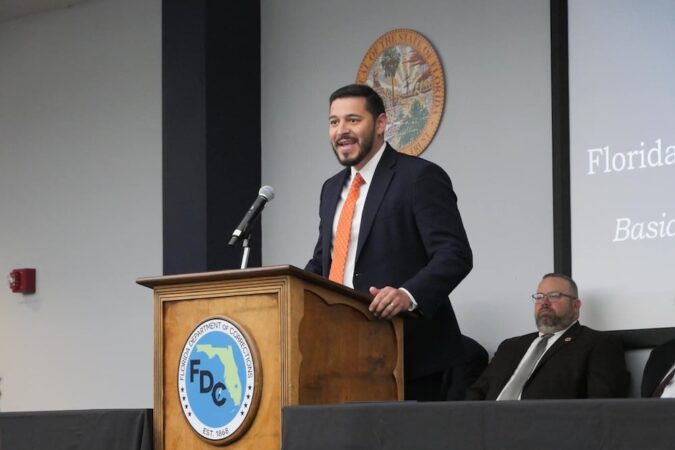
Gov. Ron DeSantis’ minions love to taunt those they see as their enemies. Education Commissioner Anastasios Kamoutsas sent out a mass email to all of Florida’s public school teachers with the subject line: “Unions Lose Another Frivolous Legal Challenge as Florida Advances Course Transparency.”
The message:
Teachers,
Please be advised. This is a lawsuit that the union wasted your hard-earned membership dues on. We know that their poor representation is not a reflection of the great work you are doing in the classroom each and every day. I look forward to finishing the year out strong and continuing to make students the priority at all schools across Florida.
Sincerely,
Anastasios Kamoutsas
Commissioner of Education
- Background: Kamoutsas was DeSantis’ deputy chief of staff who screened candidates for the UWF Board of Trustees, which led to his former boss, Education Commissioner Manny Diaz Jr., winning the UWF presidency and Kamoutsas being named Diaz’s successor. Big paychecks for all.
The Issue
Florida’s two largest teachers unions have withdrawn their legal challenge to a state rule requiring public colleges to post course syllabi and reading lists at least 45 days before classes begin, effectively ending the fight without a court ruling.
- The Florida Education Association and United Faculty of Florida filed their administrative complaint after the State Board of Education amended Rule 6A-14.092 in November 2025. The rule requires every Florida College System institution to make detailed syllabi — including required reading materials, course expectations, and grading criteria — publicly available well in advance of each semester.
The unions argued the rule represented an unlawful overreach of agency authority and raised concerns about academic freedom. Faculty groups warned that making syllabi easily searchable by the public could chill the inclusion of controversial course content and potentially expose instructors to harassment over their reading assignments and classroom topics.
What’s Next
With the challenge dropped, the 45-day posting requirement remains in full effect. That means faculty across the state college system must finalize their syllabi and reading lists far earlier than many are accustomed to, raising practical questions about workload and the flexibility instructors have to adjust course content mid-semester in response to current events or student needs.
The broader question here is one Florida keeps circling back to: where does transparency end and political pressure on classroom instruction begin? The unions lost this round, but the tension between accountability and academic freedom in Florida’s education system isn’t going anywhere.