A federal law signed by President Donald Trump this summer reshapes how states fund food assistance programs—and Florida appears poised to take one of the biggest financial hits unless the DeSantis administration can better manage it.
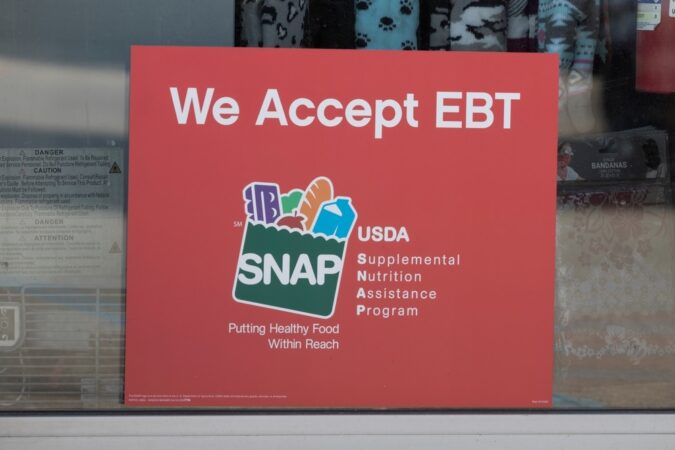
The “One Big Beautiful Bill Act” introduces a new cost-sharing model for the Supplemental Nutrition Assistance Program (SNAP), commonly known as food stamps, that ties state financial contributions to their payment error rates.
- Possible Impact: With Florida’s error rate reaching 12.6% in the most recent federal fiscal year, the state could be facing a bill exceeding $1 billion when the law takes effect on Oct. 1, 2027.
Cost-Sharing Formula
Under the Act, states will now contribute to SNAP benefit costs on a sliding scale based on their payment accuracy:
- Under 6% error rate: No state contribution required
- 6% to 8% error rate: State contributes 5% of SNAP benefit costs
- 8% to 10% error rate: State contributes 10% of SNAP benefit costs
- 10% or higher error rate: State contributes 15% of SNAP benefit costs
The Math: The error rate is calculated by dividing the total dollar amount of benefits issued incorrectly—including both overpayments and underpayments—by the total amount of SNAP benefits distributed during the review period.
DeSantis’s Challenge
During the 2023-2024 federal fiscal year, Florida’s Department of Children and Families (DCF) oversaw the distribution of $6.8 billion in federal food assistance to 2.3 million households. With an error rate of 12.6%, the state falls into the highest contribution tier. If these rates hold, Florida would be required to contribute 15% of SNAP benefit costs—a figure exceeding $1 billion based on current distribution levels.
- Dig Deeper: Florida’s error rate stood at 8.1% in the 2022-2023 fiscal year, and the state hasn’t achieved the penalty-free threshold of under 6% since before the COVID-19 pandemic.
Bridget Royster, assistant secretary for Florida’s Department of Children and Families’ Economic Self-Sufficiency Program, addressed the House Human Services Subcommittee on Wednesday with cautious optimism. “I’m proud to say we’re moving in the right direction and actively working towards achieving a payment error rate of less than 6%.”
- The agency faces an uphill battle to reduce errors while managing one of the nation’s largest SNAP programs serving millions of vulnerable households.
Expanded Work Requirements
The “One Big Beautiful Bill Act” didn’t just change how SNAP is funded—it also significantly expanded work requirements for recipients, affecting hundreds of thousands of Floridians.
The law increased the upper age limit for work requirements from 54 to 64 years old, applying to able-bodied adults without children or other qualifying exemptions. This change alone moved 181,217 Florida SNAP recipients under work requirement rules.
Additionally, the federal law removed work requirement exemptions that previously existed for:
- Homeless individuals
- Veterans
- Former foster youth under a certain age
In another significant shift, 9,753 people in Florida with humanitarian immigration statuses—including asylees, refugees, victims of trafficking, and parolees—were made ineligible for SNAP benefits entirely under the new federal requirements.
 Support Our Journalism

If you like our reporting, consider buying us a cup of coffee – here. Your donation will help broaden our reporting. Thank you.