

— New Audit Reveals $398 Million Shortfall—
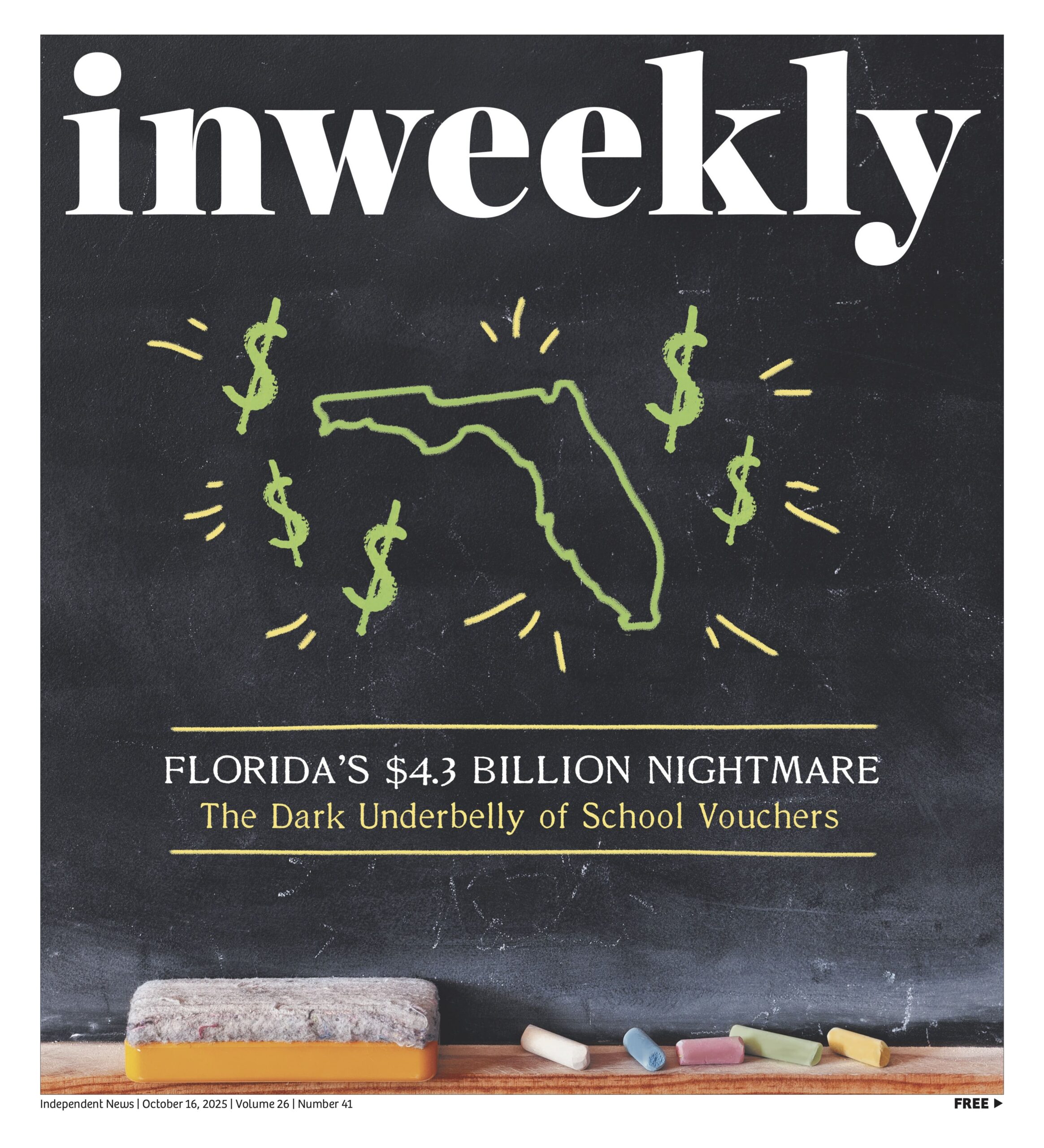
The 25-page report supports what I reported last month (Florida’s $4.3 Billion Nightmare). The education system has been overwhelmed by unprecedented growth in scholarship programs, plagued by processing delays, and lacking the accountability mechanisms necessary to track where taxpayer dollars actually went.
- The bottom line: funding didn’t follow the child as intended, and someone had to pay the price.
The Numbers That Don’t Add Up
The miscalculation is costly. The Legislature appropriated $12.7 billion in Florida Education Finance Program (FEFP) funds for the 2024-25 school year based on enrollment projections. However, actual scholarship program expenditures exceeded budgeted amounts by nearly $398 million.
- Background: In 2023, state lawmakers eliminated income restrictions and opened scholarship programs to virtually every child in Florida who wished to enroll in a non-public school option.
As a result of the changes, the Family Empowerment Scholarship (FES) programs exploded:
- FES-EO (Educational Options): Enrollment jumped from 80,812 students in 2021-22 to 267,413 in 2024-25, with payments soaring from $526 million to over $2 billion
- FES-UA (Unique Abilities): Enrollment grew from 26,743 to 115,428 students, with payments increasing from $248 million to nearly $1.2 billion
Financial Squeeze
The money began to run out as Education Commissioner Manny Diaz left his post to become the interim president of the University of West Florida.
In June 2025, the Department of Education, under new Commissioner Anastasios “Stasi” Kamoutsas, had to reduce the final FEFP payment to school districts by $47 million. Even after releasing $118 million from the Educational Enrollment Stabilization Program—essentially the state’s rainy-day fund for education—there simply wasn’t enough money to go around.
Exhibit B of the audit report shows the painful details: districts across Florida took hits ranging from a few thousand dollars to millions. Broward County lost $5.3 million. Miami-Dade: $6.8 million. Hillsborough: $3.5 million. Orange County: $4.1 million.
- Escambia County was supposed to be paid $5,091,573 but only received $4,664,873, leaving a $426,700 shortfall.
Duplicate Payments Ran Wild
The Department of Education failed to prevent and recover duplicate payments. The audit uncovered instances where students were simultaneously enrolled in public schools while receiving scholarship funds.
The auditors found a pattern of missed opportunities and inconsistent enforcement:
Response Rates That Reward Non-Compliance: When the Department identified potential duplicate enrollments, it sent surveys to parents asking if their children were enrolled in public schools. The response rates were abysmal—just 35% for the first survey and 19% for the second. Worse, the Department’s handling of these responses was “arbitrary and plagued with inconsistencies.”
Repeat Offenders Identified Too Late: The audit found students appearing as matches across multiple cross-checks—September, November, February, March, and July, which showed the state repeatedly missed opportunities to halt duplicate payments. For FES-EO, potentially excess payments ranged from $32 million to $51 million. For FES-UA, the range was $28 million to $59 million.
No Paper Trail: The Department couldn’t provide adequate documentation reconciling requested returns of funds to actual amounts received from scholarship-funding organizations (SFOs). In one example, the Department formally requested SFOs return funds for 2,153 students, but no amounts were returned and no records explained why.
When the Department did identify ineligible scholarship payments, the audit found the Department sometimes used a “withholding process”—reducing future payments to SFOs instead of requesting direct repayment—but “in no instance was the Department able to provide for audit records with the detail necessary to support the propriety of the withholding process.”
- In March and April 2025, Step Up For Students sent the Department checks totaling $18.4 million for ineligible student balances from the 2023-24 school year. The Department didn’t deposit them until November 2025—after our auditors inquired about them—because they supposedly lacked required student balance information.
What Needs to Change
The Auditor General made several recommendations, which essentially amount to a complete overhaul of how Florida manages school choice funding:
- Create a separate FEFP “silo” for FES-EO and FES-UA programs to improve budget predictability
- Realign application timelines with funding decision timeframes
- Ensure adequate financial reserves to avoid funding disruptions
- Strengthen survey processing controls to prevent delays
- Establish uniform, documented processes for handling cross-check results and recoupments
- Add staff resources to handle the cross-check workload
- Revisit scholarship account balance limits to ensure they balance program needs with overall education funding needs
The Department’s Response: We’re Working On It
In its response, Education Commissioner Anastasios Kamoutsas acknowledged the challenges but emphasized that “no state has administered a school choice or scholarship program as large as Florida’s.” The Department noted it has already taken steps to address the issues, including:
- Providing lists of potential duplicate students to school districts and requesting confirmation before releasing scholarship funds
- Completing required cross-checks of final survey data
- Including the separate FEFP silo recommendation in its legislative budget request
The Department pointed out that all students identified as duplicates “have been removed from either scholarship funding or public school enrollment records, so no additional duplicate payments for these students are made.”
Gaetz Responds
After the Auditor General’s staff presented the report, State Sen. Don Gaetz, who represents Northwest Florida, Sen. Don Gaetz announced a bill he plans to file this week aimed at fixing critical accountability problems in Florida’s school voucher programs, including the state’s inability to locate 30,000 students receiving taxpayer-funded scholarships.
- Background: Gaetz has a substantial background in public education. He was elected to the Okaloosa County School Board in 1994, where he served until 2000. He then became the Superintendent of the Okaloosa County School District from 2000 to 2006, becoming the first non-educator elected to that position. Under his leadership, the district improved significantly, rising from 27th to 1st in Florida for student performance, achieving national recognition for academic excellence. Beyond local school district leadership, Gaetz served in the Florida Senate starting in 2006, where he chaired the Senate Education Committee and sponsored legislation aimed at expanding educational standards and introducing honors diplomas.
Speaking to colleagues, Gaetz revealed the tracking problem has worsened since last year.
- “Last year, we told you the state could not find 23,000 students on any given day. Today the number is 30,000 students that we can’t find taxpayers are paying for, but we can’t find where they are,” he said. “We cannot ensure that the money is following the student to the family’s provider of choice, especially when students are moving back and forth between providers.”
He added that the state cannot account for over $270 million in scholarship funds “being in the right place at the right time,” including $100 million that was improperly paid to Scholarship Funding Organizations instead of public school districts.
Gaetz wants to restructure how the Department of Education handles the scholarships. He shared that the Auditor General told him, “Whatever can go wrong with this system has gone wrong.”
Key provisions of his bill include separating Family Empowerment Scholarship funding as a distinct category outside the traditional school funding formula, establishing monthly payments with verification of student eligibility before each payment, and requiring student IDs for all scholarship recipients to enable accurate tracking.
The legislation would require annual audits instead of the current two-to-three-year cycle, lower the 3% management fee charged by SFOs, and establish competitive performance contracts to replace what Gaetz called “loose SFO arrangements.”
- With nearly 20% of Florida’s school-aged children now educated in private schools or homeschooled at public expense, Gaetz acknowledged the system’s rapid growth has created budgeting uncertainty. The bill includes expanded use of the Education Stabilization Fund to ensure all eligible scholarships are funded while protecting public school districts from delayed payments.
See 2026-046 School Accountability.