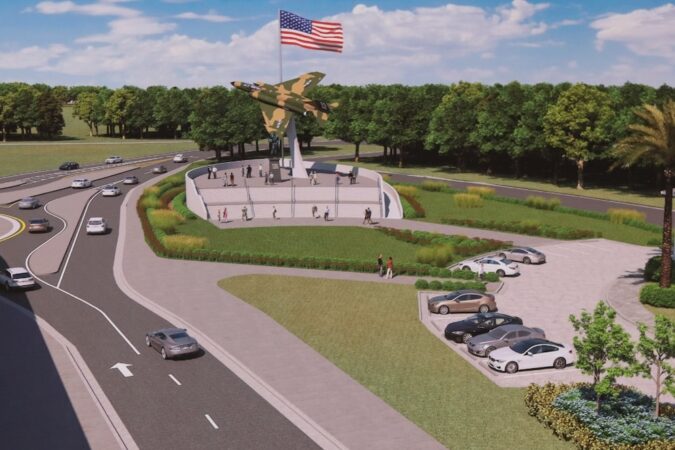
This morning, the Escambia County Commissioners engaged in a lengthy discussion about the use of Tourist Development Tax (TDT) funds for the General Daniel “Chappie” James Monument. The debate centered around legal concerns raised by the Tourist Development Council (TDC) about whether the project’s construction qualifies for tourism tax dollars under Florida statutes.
Tourism Funding Under Scrutiny
County Attorney Alison Rogers opened the discussion by explaining that the TDC had requested the county send a letter to the Florida Department of Revenue (FDOR) regarding the potential misuse of tourism development funds. This process is outlined in state TDT statutes when tax dollars are believed to be misspent.
Rogers noted that she had not yet received any documentation from the City of Pensacola regarding amendments to the stewardship agreement with the Gen. Daniel “Chappie” James Jr. Memorial Foundation, nor any materials addressing how the project would promote tourism.
- “I have not seen anything come back from the city with regards to an amendment or change to the stewardship agreement with this foundation,” Rogers said. “I have not seen anything that addresses the promotion of tourism.”
Commissioners Divided on Approach
Commissioner Lumon May expressed frustration with the ongoing debate, emphasizing that the board had already voted to approve the funding.
- “It is black and white for me. It is real simple,” May stated. “I’ve been a long advocate for supporting the Chappie James Monument. I have one simple question to the clerk and the attorney: Is it legal? And we’ve already voted on it.”
May, who has consistently supported the project for several years, suggested that if TDT funds couldn’t be used, the commission should consider alternative funding sources, including discretionary funds, LOST (Local Option Sales Tax) money, or community block grants.
Commission Chair Mike Kohler sought clarity on potential risks, asking County Attorney Rogers about possible consequences of moving forward despite TDC concerns.
Legal Risks Outlined
Rogers explained the potential consequences if the Department of Revenue determined the funding was inappropriate.
- “In a worst-case scenario, let’s say the TDC moves forward with reporting it to DOR (Department of Revenue), and DOR agrees that it’s not an appropriate use of the funding. At the very least, I think you should expect that you may be obligated to repay the TDT with general funding sources,” Rogers said.
She added that the county could also risk having state funding sources cut off, including “state grants, state funding sources, FDOT monies, whatever.”
Clerk Supports Tourism Classification
County Clerk Pam Childers expressed her belief that the project qualifies as tourism-related under the statute:
“I did envision this as an open-air type museum. It doesn’t mean it’s an absolute museum by definition of statutes. It is a venue. Venues bring people, it promotes tourism history, promotes tourism.”
Childers referenced existing tourism assets in the area, including “the downtown walk with veterans” and “the walk over the three-mile bridge,” suggesting the Chappie James project would complement these attractions.
- “What’s most important is that this board is going to promote it as tourism. They believe it to be tourism,” she added, indicating she would process payment if the commission moved forward.
Project Details Clarified
Ken Pyle, secretary of Gen. Daniel “Chappie” James Jr. Memorial Foundation, provided additional context about the project’s maintenance arrangements with the city.
- “The current stewardship agreement between the city and the foundation has us doing the maintenance on the structure in perpetuity, not just two years. It’s forever,” Pyle explained.
He described how the city would handle normal park maintenance, such as “blowing off leaves, washing steps,” while the foundation would be responsible for maintaining the airplane display and statue.
Pyle stated that the foundation expects to have a $250,000 endowment after construction, which at 5% interest would provide approximately $12,000 annually for maintenance costs. It was unclear whether the foundation had sufficient private dollars to fund the endowment.
Tourism Classification Challenges
Rogers clarified that the specific subsection of the tourism statute under which the project is classified matters significantly for legal compliance.
- “The concern with the venue is that the statute’s not clear on whether or not construction of a venue is anticipated by the statute,” Rogers explained. She suggested this would likely be the argument made by TDC Chair Bear—that while promoting a venue with TDT funds is permissible, building one might not be.
Commission Decides to Move Forward
Despite the concerns raised, most commissioners wanted to move forward with the previously approved funding.
- Commissioner Steve Stroberger opposed seeking an Attorney General’s opinion on the matter, stating firmly: “We are the local governing body. We are the ones that are going to decide. I don’t want another meeting on this. I’m not reconsidering my vote on this.”
Commissioner Steven Barry suggested allowing the County Attorney to meet with the City Attorney before taking any additional action, noting that the commission had already made its decision.
Chair Kohler concluded the discussion by instructing Rogers to work with the city on resolving the remaining legal issues, while indicating the board’s intention to proceed with the funding as previously approved.
- The next TDC meeting is scheduled for April 15, giving officials time to address concerns before further action by the tourism council.
Here is a recording of the discussion: County Clerk Childers shares her logic at the 3:59 mark and says she will cut the check. – which may be the quickest TDC check she has cut in four years:





The Florida Attorney General has consistently advised that the “primary purpose” of an expenditure of tourism development tax revenues must be the “promotion and advertisement of tourism.” The key operative term is “primary.” So even if the so-called “memorial plaza open air museum” might qualify within the state’s meaning of the term “museum,” they still have to get over the “primary” hurdle. The far simpler solution would be for the BCC to use LOST revenues to fund the project. In addition to maintenance, need to think about “capital improvements” defined by state law as improvements expected to last five or more years. If something is damaged, whether the concrete base, a bench or a water foundation, etc. who funds the improvement? How about if the city leased the land to the “country” with the county then having to work out the details with the Foundation?
It is a waste of money. Nobody knows who this guy is other than the locals. But if you are trying to lure tourists
This was s not the way to go. You want to appeal to a larger groups, I don’t think that kids would enjoy it.