
College Sports Reform
U.S. Senate Passes Protect College Sports Act 77-22—Both Florida Senators Vote No
The bill UWF senior Lumpy DeWeese traveled to Washington to support cleared the Senate Monday night 77-22. Senators Rick Scott and Ashley Moody voted no together, though Moody had reshaped a key part of the bill before the final vote.
The Protect College Sports Act passed the U.S. Senate 77-22 Monday night, a lopsided, bipartisan margin that Sen. Ted Cruz, R-Texas, said was the goal from the start: not squeaking by on 60 votes, but sending a clear signal that Congress wanted to step in and stabilize college sports.
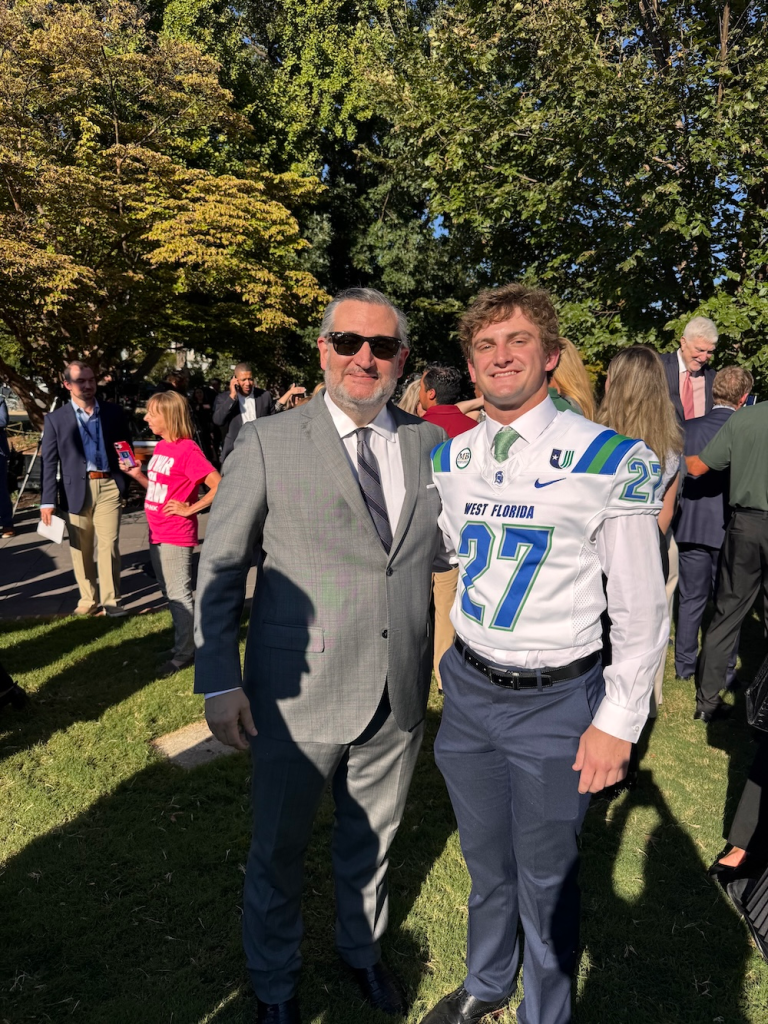
UWF’s Lumpy DeWeese was part of the push to get it there. The senior joined coaches including Kelvin Sampson and John Calipari in D.C. earlier this month to show support for the bill, telling me on Rick’s Blog Live that the transfer portal has become “free agency” and that mid-major programs like UWF badly need the antitrust protections built into the legislation.

Florida’s Senators Vote No
Both of Florida’s U.S. senators, Rick Scott and Ashley Moody, voted against final passage. Their objection centered on provisions restricting how easily schools like Florida State and the University of Miami could move between power conferences, a sensitive issue in a state with two programs that have repeatedly floated leaving the ACC for the Big Ten or SEC.
But Moody successfully negotiated a last-minute amendment raising the cap on power conference membership from 19 to 20 programs, giving the Big Ten and SEC more room to grow and, by extension, more room for a school like FSU or Miami to eventually make a move. The Senate adopted that amendment before the final vote.
What’s in the Bill
- An antitrust exemption for the NCAA, meant to help it enforce pay caps and other rules that have collapsed under years of legal challenges
- One free transfer per athlete’s college career, with limited exceptions
- A five-year eligibility window beginning at high school graduation or age 19
- A new power conference membership cap of 20 schools; the Big Ten has 18, the SEC has 16
- A three-year waiting period for any school jumping from one power conference to another, a restriction that expires at the end of 2031
- A raised revenue-sharing cap, letting schools pay athletes directly up to roughly $49 million a year, up from about $21.5 million under the current House settlement terms
- Required disclosure of foreign government or sovereign wealth fund investment in athletic departments
- Preserved rights for athletes and families to sue schools over issues like sexual misconduct or wrongful death
What didn’t make it in: A push to cap coaching salaries at $5 million and restrict how often coaches can change jobs failed 52-47. An amendment to double a fund for former athletes’ major medical care, from $100 million to $200 million, came up one vote short.
What’s Next
The bill now heads to the House, which isn’t scheduled to vote on legislation until Nov. 9, after the midterms, and will only be in session for five weeks before year’s end. If the House doesn’t act during that lame-duck window, the bill dies and the process starts over in the new Congress. Cruz has said he expects the President to sign it if it clears the House.