
CITY HALL
Mayor Reeves says the curfew proposal is aimed at unaccompanied minors causing public safety problems—not a kid leaving the movie theater at 11:01 p.m.
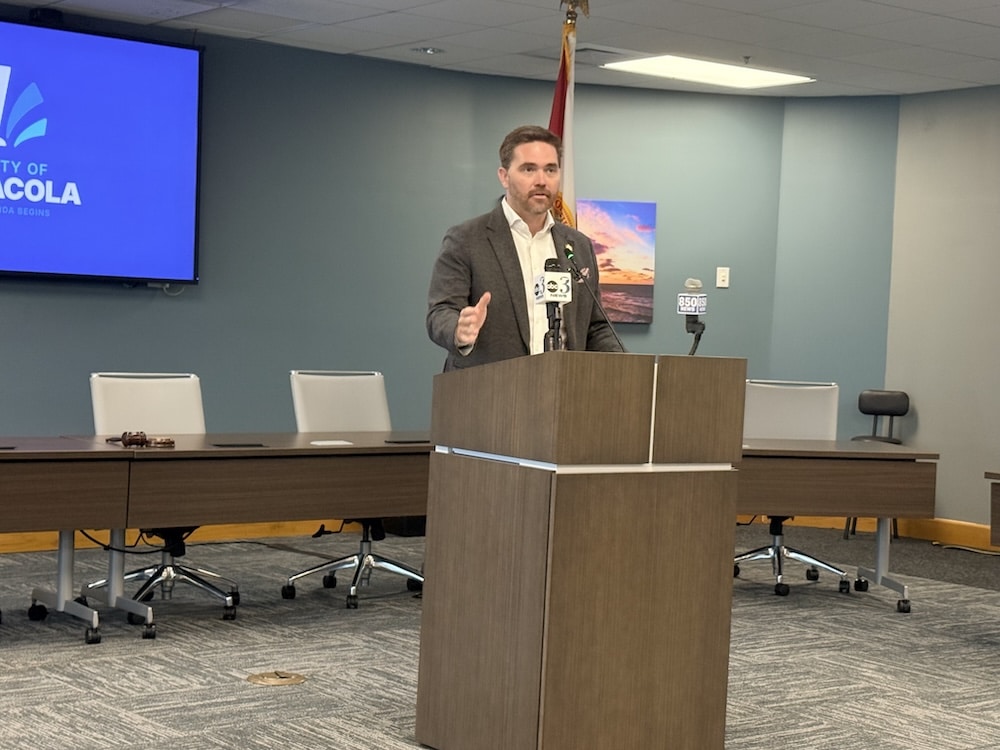
Pensacola Mayor D.C. Reeves used his Wednesday press conference to lay out the first details of a draft ordinance that would set a curfew for minors 17 and under, saying he’s still reviewing a first draft developed by his legal department. He is still reaching out to council members for their input and hopes to bring an ordinance to city council as soon as August.
“This is not a full curfew,” Reeves said, pushing back on how the proposal has been characterized. “We’re not asking grown adults to not be out at night at eleven p.m. or at midnight.” The restriction, as drafted, applies only to unaccompanied minors.
How the enforcement would work
Reeves described a stair-step approach to enforcement rather than immediate citations:
- First offense: a warning
- First or second offense: minors could be taken to a local police department so officers can call parents
- Second violation: a civil citation
- Repeat violations: an increased civil citation
“Our city is not your babysitter. There is some parent accountability when minors are unaccompanied.”
The draft also specifies possible repercussions for parents, although Reeves reiterated that the wording is still under review.“I don’t think it’s reasonable that the streets of the city be determined as the babysitter for the night for unaccompanied minors,” he said.
Who’s exempt
Reeves ran through several possible carve-outs built into the draft:
- Minors accompanied by someone 21 or older
- Minors traveling to or from work
- Minors commuting home by vehicle—police won’t pull over a car simply because a minor is inside
- Minors on private property, including hanging out at a neighbor’s house
Citywide or not? Still unresolved
The biggest open question is geography. I asked the mayor if the curfew would cover the entire city. The draft, as currently written, applies citywide with no street-by-street boundaries. Reeves said he still needs to check with the city’s legal department on whether the ordinance can legally be limited to specific corridors or neighborhoods at all.
- He said that question—citywide versus specific areas—will be the central issue he raises with council members over the coming days. “Is that something you feel like is needed there, or do you feel like it’s not?” Reeves said he plans to ask them.
He was careful to say council pushback isn’t driving the uncertainty. Rather, the draft only reached his desk in the last 48 hours, and outreach to council members is only beginning now.
Timeline
Reeves said the draft has already received an initial legal review. His next step is gathering feedback from council members before the ordinance heads to a vote. “If we can make it in August, making sure that we’ve got the feedback from council members, that legal is okay with it, I’ll move it in August,” he said, adding that September would be the latest he expects it to come before council.