
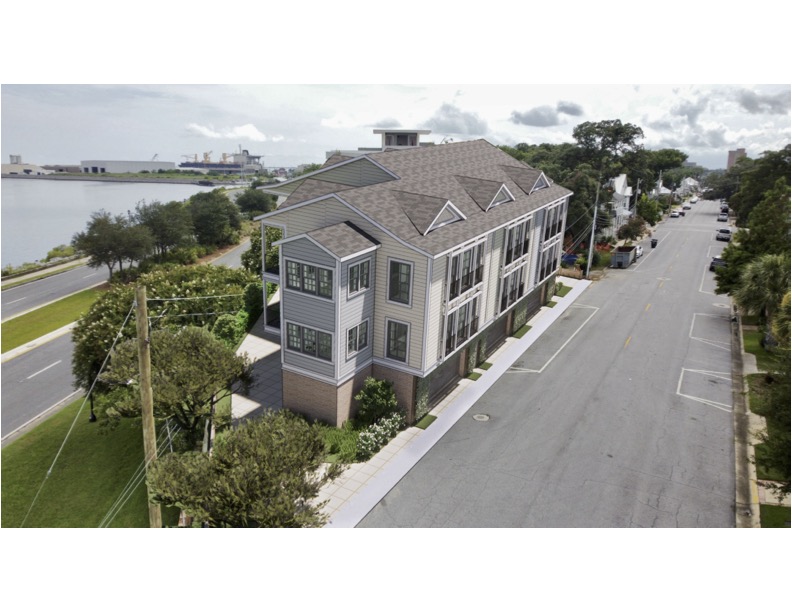
The City of Pensacola’s Architectural Review Board voted 4-1, with one abstention, last month to approve significant setback variances for a proposed 10-unit residential development at 627 East Government Street, despite strong opposition from neighboring residents.
Spencer’s Case for the Variances
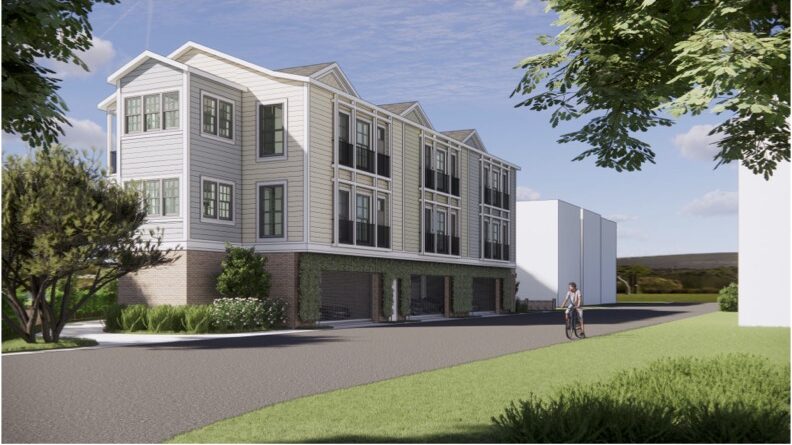
Spencer built his case around the property’s unique constraints. The triangular lot, created decades ago by Bayfront Parkway’s construction, presents unusual challenges that don’t affect other properties in the historic district. The architect noted that the existing building already violates current setback requirements, creating what he termed “existing non-conforming conditions.”
- “I would never come before you today seeking this variance if there had not been an existing building that has been here for decades,” Spencer told the board, pointing out that his proposal actually steps back four feet from the sidewalk at ground level, improving upon the current building’s zero setback.
Spencer presented ten letters of support, including one from commercial real estate broker DeeDee Davis, who argued the project would enhance rather than diminish property values. He also highlighted that the development would increase landscaping from 2,750 to 3,230 square feet and provide additional permeable paving.
Neighbors Rally Against the Project
Residents from the surrounding Seville Historic District and Crown Cove neighborhoods mounted organized opposition, with nearly two dozen speakers addressing the board during the public comment period. Their concerns centered on several key issues:
Parking and Traffic: Multiple residents cited the national average of 1.9 cars per household, arguing that 10 units would generate approximately 19 cars but only provide 10 parking spaces. Chris Carroll, who lives directly across the street, noted that garage access would eliminate 3-4 existing street parking spaces, exacerbating an already tight parking situation.
Density and Character: Residents characterized the 500-600 square foot units as more suitable for short-term rentals or extended-stay facilities than permanent residences. “This is going to be the camel under the tent,” warned attorney Steven Preisser, speaking for the Seville Place Homeowners Association, arguing that approval would set a dangerous precedent.
Safety Concerns: Tracy Preisser raised safety issues about cars exiting garages directly onto sidewalks heavily used by pedestrians, cyclists, and families accessing nearby Veterans Memorial Park.
Property Values: Despite Spencer’s expert testimony to the contrary, residents uniformly expressed concern that the high-density development would harm their property values and neighborhood quality of life.
The Quasi-Judicial Process
Board Chairman George Mead repeatedly reminded speakers that variance proceedings are quasi-judicial, requiring evidence specifically related to the seven variance criteria rather than general opposition or support. This constraint frustrated some residents who felt their broader concerns about neighborhood impact weren’t being heard.
- The key variance criteria include proving special conditions exist that are peculiar to the property, that the applicant didn’t create the hardship, that denial would create unnecessary hardship, and that approval wouldn’t harm the public welfare or grant special privileges unavailable to other properties.
Why the Board Approved
The 4-2 approval reflected the board’s focus on the technical variance criteria rather than neighborhood opposition. Chairman Mead delivered the most detailed rationale, emphasizing several key points:
Historic District Character: Mead noted that varied building placement is fundamental to the historic district’s character, citing a code provision that allows reconstruction of historic buildings in their original positions. The existing non-conforming building, while not historic, established a siting pattern consistent with the district’s character.
Unique Site Conditions: The triangular lot’s constraints, particularly the converging setbacks that severely limit development potential, created hardships not experienced by other properties. Mead emphasized these conditions weren’t created by the applicant.
Minimal Impact: The proposal actually reduces some existing non-conformities while extending only modestly beyond the current footprint, with new additions respecting required setbacks.
Board member Yuri Ramos supported the Bayfront variance while expressing reservations about the Government Street variance but ultimately voted for approval after staff clarified that the application had to be considered as a whole.
The approval allows the project to proceed to the next phase: demolition and design review, where neighbors will have another opportunity to address concerns about the building’s appearance and neighborhood compatibility. However, the fundamental footprint and density questions have now been settled, setting the stage for what promises to be continued community debate about development in Pensacola’s historic neighborhoods.


If you like our reporting, consider buying us a cup of coffee – here. Your donation will help broaden our reporting. Thank you.