
The Pensacola and Perdido Bays Estuary Program released its 2025 State of the Bays Report today, revealing critical conditions for oyster populations in the Pensacola Bay System while showing stability in seagrass habitats across both watersheds.
- What? The biennial report, which serves as a comprehensive assessment of ecosystem health indicators, ranks environmental factors as improving, stable, declining, critical, or undetermined based on scientific monitoring data. The findings present contrasting conditions between the two bay systems, with water quality improvements in some areas offset by concerning declines in others.
- The Pensacola and Perdido Bays Estuary Program operates under a mission to restore and protect local watersheds through restoration, education, and unbiased scientific monitoring of bay, estuary, and watershed health.
Critical Oyster Decline Signals Broader Ecosystem Stress
Oyster populations in the Pensacola Bay System have reached critical status, indicating a significant concern for the overall health of the estuary.
- Why this matters: The shellfish serve as natural water filtration systems and provide essential habitat for numerous marine species.
Water Quality
Water quality trends vary between Pensacola Bay and Perdido Bay.
- The Pensacola Bay System shows overall stability across key metrics, including nitrogen, phosphorus, dissolved oxygen, turbidity, and chlorophyll-a levels.
- However, the Perdido Bay System presents mixed results with improving dissolved oxygen levels and stable nitrogen, while phosphorus and chlorophyll-a levels are declining.
- Turbidity measurements remain undetermined because of inconsistent monitoring protocols.
Bacterial Contamination
Beach advisory data reveals improving conditions in the Perdido Bay System, where fewer advisories have been issued due to reduced bacterial concentrations.
Conversely, bacterial levels in Pensacola Bay System’s urban bayous—including Chico, Grande, and Texar—continue to frequently exceed established standards, while overall bay advisory numbers remain consistent.
The Perdido Bay System has experienced fewer sanitary sewer overflows, while such incidents have increased in the Pensacola Bay watershed.
New Fisheries Data
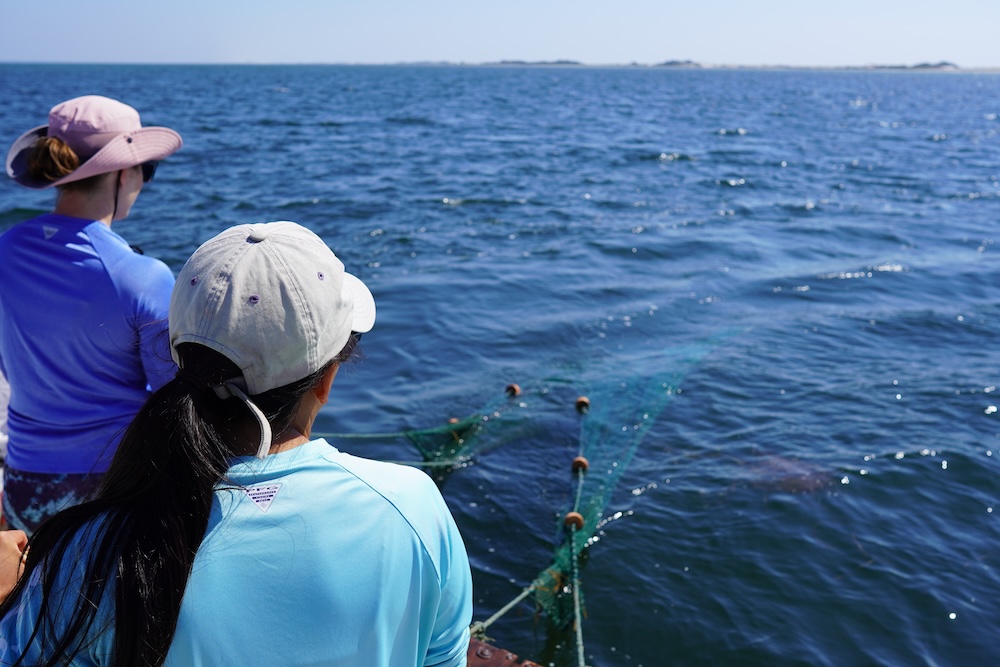
This year’s report introduces fisheries monitoring as a new category, providing previously unavailable data on species richness across bay segments. The analysis identifies correlations between seagrass presence and fish diversity, with Perdido Bay’s lower areas—including Wolf Bay, Little Lagoon, and Lower Perdido—supporting higher species richness than open bay areas.
Key commercial and recreational species documented include Gray Snapper, Speckled Trout, and Brown Shrimp. While species richness has fluctuated over time, overall trends remain stable in monitored areas.
- Pensacola Bay fisheries data remains undetermined mainly due to inconsistent monitoring efforts, with Santa Rosa Sound representing the most consistently monitored area within the system.
Community Response and Next Steps
The community can take action to help improve conditions in the bay through many steps, including:
- Becoming an Estuary Program Member or Business Sponsor by making a financial contribution to support water quality monitoring, restoration, and education. https://estuary101.com/donate/
- Being Seagrass Aware: You can help prevent propeller scarring — trim up your motor when boating over shallow seagrass beds — your motor will thank you too!
- Practicing smart fertilizer use to prevent algal growth and fish kills.
- Don’t fertilize right before a rainstorm
- Sweep or blow grass clippings and excess fertilizer from driveways and streets back onto the lawn
- Never fertilize within 10 feet of a waterbody
- No fats, oils, or grease down the drain: Fats, oils, and grease can clog your sewer line, just like cholesterol can clog your arteries. Don’t pour them down the drain. Dispose of them in a sealed container, either in the trash or at a local disposal center.
- Keep shorelines soft and living: Consider a natural or living shoreline instead of seawalls or bulkheads for waterfront property. These softer, more natural shorelines filter stormwater runoff, absorb storm surge, reduce erosion, and provide habitat for estuary creatures and critters. Plus, they’re cheaper and require less maintenance!
- Maintain septic tanks and lateral lines.
- Maintain vegetated barriers that act as buffers along wetland edges and streambanks.
- Support investments for water quality improvements and wastewater infrastructure.
- Boat responsibly: Pump out, don’t dump out.
The complete 2025 State of the Bays Report, including interactive data visualizations and detailed methodology, is available at stateofthebays.org. The next report is scheduled for release in 2027, continuing the biennial assessment cycle established in 2023.