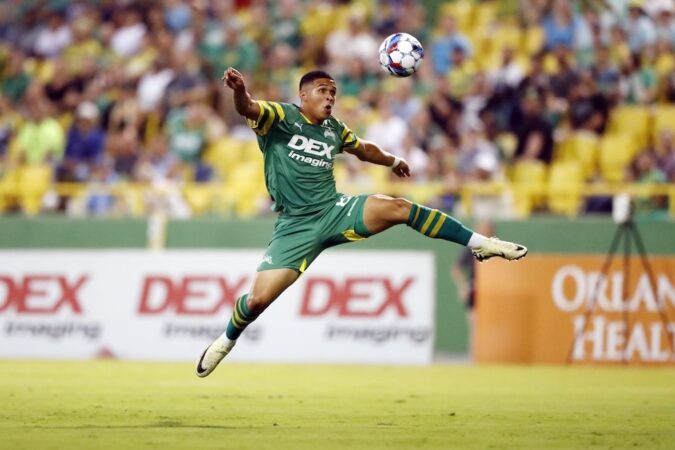
Late last March, the City of Pensacola and the United Soccer League entered into a 1-year exclusive negotiations deal to potentially bring professional men’s and women’s soccer teams to Pensacola.
Details: That one year is fast approaching, but the agreement includes the possibility of two consecutive six-month extensions. The agreement grants the USL the right of first refusal to serve as master developer of a multipurpose stadium.
Challenges
The obstacles in the negotiations remain the same. Where will the City build a 3,500 to 5,000-seat stadium, and how will the City fund a $35-plus million stadium for two USL franchises?
1. Stadium Requirements: USL officials insist that a stadium be downtown. That leaves few options, and those options dwindle when considering the governing body, FIFA, insists that soccer games be played on fields that face north to south to minimize the sun from interfering with play.
- Not a Fit: Blue Wahoos Stadium faces east to west. Same issue for any possible construction at the Tech Park or the Bay Center parking lot.
“The success of all this comes down to a venue,” Pensacola Mayor D.C. Reeves said. “Where are they going to play? Their model is all about these downtown stadiums with these other tie-ins; that’s kind of the model they’re going after. We’ve had a lot of conversations and continue to have regular meetings with them, but the elephant in the room is where the stadium will go.”
- Reeves continued, “There’s not really a city parcel downtown that this could go on.”
2. Funding: If the City somehow remedies that problem, the next challenge is funding the stadium. One possibility is a public-private partnership that would put some onus on taxpayers. The City is familiar with public-private partnerships. City bonds covered $45.6 million for Community Maritime Park, which includes Blue Wahoos Stadium.
3. Local Ownership: Another potential obstacle is finding a local ownership group willing to invest millions of dollars into the franchises. Reeves said he has made an “assortment of introductions” between USL officials and locals interested in ownership.
- “I feel confident there’s a skilled local ownership group that has enthusiasm about the idea,” Reeves said. “I don’t have as much concern about that as the elephant in the room, which is the stadium.”
Reeves continued, “Maybe it’s not the cart before the horse, but at a minimum, they have to work concurrently.”
Founded in 1986, the USL is North America’s largest and fastest-growing pre-professional and professional soccer organization.
USL officials did not respond to an interview request for this story.