Looking Back
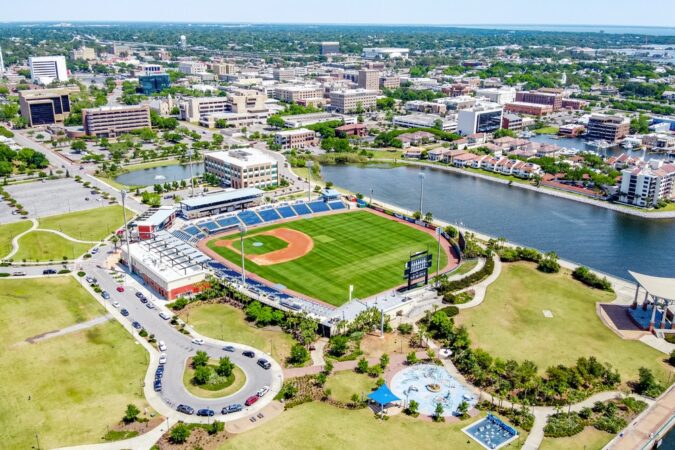
This week marks the 20th anniversary of the referendum vote that made the Community Maritime Park possible—the vote that ultimately delivered Blue Wahoo Stadium and reshaped downtown Pensacola. Walk through that park today for a ball game or a festival, and it’s easy to forget how close the whole thing came to never happening at all.
- On the latest Rick’s Blog Live, I sat down with Quint Studer—the man who became “the guiding light” for the project—to remember what it actually took to get there.
A Minor League Owner Who Backed Into a Fight
Studer wasn’t looking for a political battle. He and his wife owned a small minor league baseball team, and Studer—a national healthcare consultant who traveled constantly—simply wanted a place for the team to play.
“I walked into (referendum fight) not knowing what I was walking into,” Studer said. “Once you’re halfway into it, sort of like having a baby—once you’re dilated to six, you ain’t going back.”
That instinct sent him looking at other cities—Lansing, Fort Wayne, Charleston—and asking why they had ballparks and Pensacola didn’t. He and financial advisor and CPA, Mort Sullivan, scouted sites inside the city limits. Then Hurricane Ivan hit.
The Bookend That Changed Everything
After Ivan, Admiral Jack Fetterman—head of the Naval Aviation Museum Foundation—was pushing for a maritime museum on the Trillium property, the same waterfront site where Blue Wahoo Stadium now sits. Studer worried his ballpark ambitions would complicate Fetterman’s effort and offered to step aside.
Fetterman wouldn’t hear of it.
- He told Studer the park and the museum would be “a bookend”—and pushed hard for both
- Two years earlier, voters had overturned a council vote for a similar project on that same property, dubbed the Trillium Project
- That history left the city gun-shy, and put Studer and Fetterman in a position where the project would only happen if the private sector made it happen”
The council approved the concept in January and February 2005, and Studer committed to bringing in internationally known urban planner Ray Gindroz to design it. A year of hurdles followed, ending with a council vote in March 2006—passing 9 to 1, with only Councilman Marty Donovan opposed.
What $5 Million Actually Cost Him
The fine print of a pledge: When Studer committed $5 million to the project, opponents asked what would happen if he died before paying it off. His answer: a life insurance policy costing $52,000 a year. Because the fight dragged on until roughly 2010, Studer says he paid close to a quarter of a million dollars just to insure his own promise.
The Petition Fight—and the Birth of Rick’s Blog
Fetterman died suddenly, right before the council vote. The opposition—organized under the name Save Our City—immediately launched a petition drive, framing the park as a giveaway to a “hobby baseball team owner” that would bankrupt the CRA and drain city services.
Two things were different from the Trillium fight two years earlier, Studer says:
- Pensacola Young Professionals organized as ground troops—walking neighborhoods, working precincts, writing letters to the editor and debating Save Our City directly
- Misinformation spreading through local radio and the opinion pages needed a rapid response—which is what Rick’s Blog became in the summer of 2006
“Without Rick’s Blog, there wouldn’t be a maritime park.”—Quint Studer
“Tell Your Children They Can Come Back Home”
When the votes came in, the park passed. Asked by a local TV station what he wanted to say, Studer didn’t talk about the stadium.
“Tell your children they can come back home,” Studer said. “This thing was never about a stadium, never was about just a park. It was about creating a type of community that keeps your talent home.”
At the time, only 9 percent of Escambia County students who left for college came back. Today, Studer says that number is closer to 45 percent.