Removing More Books
The Escambia County School Board meets today at 5:30 p.m. in Room 160 of the J.E. Hall Educational Services Center, 30 East Texar Drive. The last item on the agenda calls for 256 books to be removed from Escambia public schools.
- The recommendation: Approve the removal of the titles listed from all school district media centers, classroom libraries, and recommended reading lists in compliance with the School Board Directive approved on June 17, 2025, to remove the books listed by the Florida Department of Education’s book removal list, without further review along with appropriate action on titles within School Board Policies 2520 and 2522.
Breakdown:
| Escambia County School Library Titles: State Objection Report and Local Challenges | |||
| List | Audience level | Description | Count |
| A | Elementary | State report, no local challenge | 26 |
| B | Middle grades | State report, no local challenge | 41 |
| C | Middle grades | State report, pending local challenge | 2 |
| D | Young adult | State report, no local challenge | 108 |
| E | Young adult | State report, pending local challenge | 23 |
| F | Adult | State report, no local challenge | 12 |
| G | Adult | State report, pending local challenge | 3 |
| H | Mixed | Local challenge only; dismissed (all copies lost through attrition) | 6 |
| I | Mixed | Local challenge only; pending, recommended for removal (title not selected by certified media specialist) | 15 |
| J | Mixed | Local challenge only; pending, recommended for removal (deselected for age or low circulation) | 22 |
| Total entries | 258 | ||
| Key figures | |||
| Total entries on the list | 258 | ||
| Distinct titles | 256 | ||
| Titles listed twice (entries minus distinct) | 2 | ||
| On the 2025-26 state objection report (Lists A-G) | 215 | ||
| Local challenges not on state report (Lists H-J) | 43 | ||
| Dismissed, all copies lost (List H) | 6 | ||
| Pending, recommended for removal (Lists I and J) | 37 | ||
| State report titles with no local challenge (A, B, D, F) | 187 | ||
| State report titles with a pending local challenge (C, E, G) | 28 | ||
| Notes | |||
| Two titles appear twice: Deogratias: A Tale of Rwanda (Lists E and J) and Me Being Me is Exactly as Insane as You Being You (Lists E and I). | |||
| The PDF labels Lists I and J as ‘not on 25-26 State Objection Report’, yet the two titles above also sit on List E, which is on the state report. | |||
A few books that stood out:
Are You There God? It’s me, Margaret, Judy Blume
Chicken Soup for the Preteen Soul, Jack Canfield
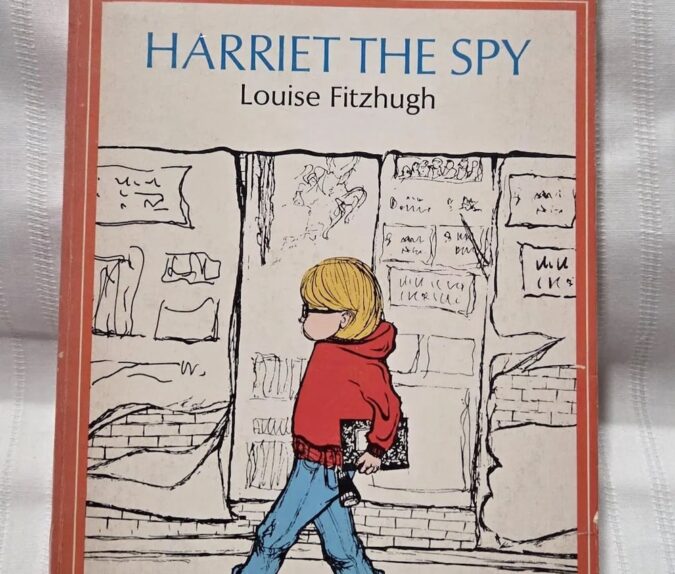
Harriet the Spy, Louise Fitzhugh
The Greatest: Muhammad Ali, Walter, Dean Myers
Ready Player Two, Ernest Cline
The Shape of Water, Guillermo del Toro & Daniel Kraus
Friday Night Lights, H.G. Bissinger
The Innocent Man, John Grisham
Eat, Pray, Love, Elizabeth Gilbert
American Gods, Neil Gaiman
Explore State Objection Reports including 2025-2026 – State Objection Report titles & Local Challenges
11th Circuit: Escambia School Board Members Must Testify on Book Removals
The ruling: The 11th U.S. Circuit Court of Appeals ruled Monday, Oct. 19, that Escambia County School Board members must sit for depositions about why they voted to remove or restrict more than 100 books in district libraries. The board members had asked the court to quash the subpoenas.
“They acted as administrators, not legislators.” Judge Andrew Brasher, writing for the majority
Why the Court Sided with the Plaintiffs
Administrative, not legislative: Judge Andrew Brasher, a Trump appointee, wrote the opinion. Judge Jill Pryor, an Obama appointee, joined him. They found that voting to remove specific books under existing board policy is the application of policy, not the making of it. That means the board members do not get the legal shield that protects legislative acts.
The dissent: Chief Judge William Pryor, a George W. Bush appointee, disagreed. He argued that board members use discretion over public policy when they vote on books. He compared the votes to a zoning decision the circuit has treated as legislative.
- The majority’s answer: That zoning case involved a request to amend an ordinance. This one involves applying a policy already in place. The majority also noted that the plaintiffs are not asking about decisions to create, repeal or amend policy.