Politics
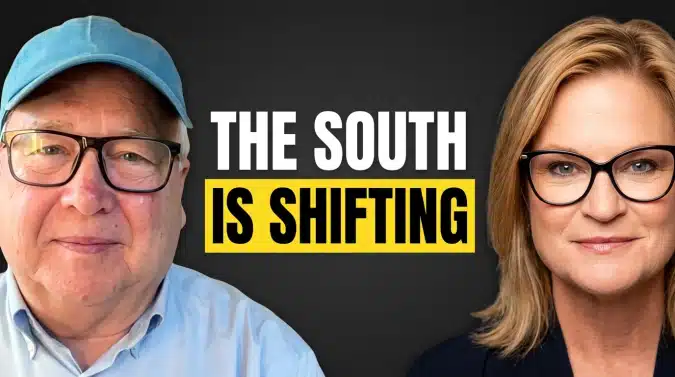
Jennifer Palmieri, the former White House communications director for President Obama, did not plan to put Florida in her new YouTube series. Then she watched what was happening in Tallahassee.
- Palmieri hosts Long Play, a free documentary series from the team behind Showtime’s The Circus. It looks at Southern politics and culture as a region. Her Florida episode, “Are Florida’s Voters Ready to Break Party Lines?“, has since passed her Mississippi episode as the show’s most popular.
She joined me on We Don’t Color on the Dog to explain why.
From “Bless His Heart” to “She’s for Real”
Low expectations. Palmieri admits she saw Florida as a contained, politically locked-down state. When David Jolly entered the governor’s race, she figured he was a placeholder who would run a scrappy campaign and lose. When Angie Nixon won the Democratic primary, she figured the same thing.
Then she saw them work. She went to watch Nixon’s rally and came away convinced. As for Jolly, she calls his campaign savvy and says he “may very well win.”
“There’s something competitive here.”
Jolly’s Bet on Black Voters
Jolly’s theory is that the undecided vote in the governor’s race is largely the roughly 10% of Black voters who have not made up their minds. Palmieri says that may or may not be true, but it is a smart thing to say because it frames the race on his terms.
He is backing it with effort:
- Church visits with the Rev. Al Sharpton and attorney Ben Crump
- A campaign stop with Rep. Jim Clyburn
- Appearances at FAMU and the Black Student Association at Florida State
I told Palmieri that Jolly is spending serious time in Northwest Florida for the same reason. Our corner of the state has been solid red for years, and he is not taking it for granted.
A Different Kind of GOP Coalition
Palmieri believes a Byron Donalds win would produce a coalition that looks very different from Ron DeSantis’s. She also cited a figure—that about one in seven Trump voters are not yet backing Donalds, and she suspects many are in our part of the state.
Then she told a story from Monticello, in Jefferson County, east of Tallahassee. A Donalds event there drew 400 to 500 people, mostly white, at a town that is about 43% Black and still has a Confederate monument at the courthouse.
An older man told her everyone in that room over 30 had once been a Democrat. He had chaired the county Democratic Party himself.
He said their county Republican dinners still do not talk about Lincoln. They talk about Reagan and Trump.
- But he pointed at Donalds, a Black candidate in front of that mostly white rural crowd, and told her: “We’re gonna vote for him, and you need to understand what a big deal that is.” He added that frustration with Democrats is part of the reason.
Why This Shapes 2028
The most useful insight may be about what comes next. Palmieri says the South will decide the 2028 Democratic presidential nominee.
- South Carolina goes first, replacing Iowa and New Hampshire
- Virginia is the last contest before Super Tuesday
- Super Tuesday then runs through states such as Georgia and Texas
A Democratic governor, she says, is typically worth two to three points in a state because of the infrastructure that stays active, and because Democrats would no longer depend on a Republican official to stand firm when elections get contentious. That is why potential 2028 candidates are already showing up in Florida, Mississippi and Texas.