Baseball / Business
Pensacola’s Quint Studer Buys Iconic Kansas City Monarchs Baseball Franchise
The Pensacola businessman and Blue Wahoos owner adds one of independent baseball’s most historically significant teams to his growing sports portfolio.
Quint Studer, the Pensacola entrepreneur best known locally for revitalizing downtown and founding the Pensacola Blue Wahoos, has acquired the Kansas City Monarchs—one of independent baseball’s most storied and community-rooted franchises—from longtime owner Mark Brandmeyer.
- The sale, announced jointly by both parties, positions Studer and his KC Roots group as the new stewards of a club that carries one of the most resonant names in all of baseball history.
A Name Steeped in History
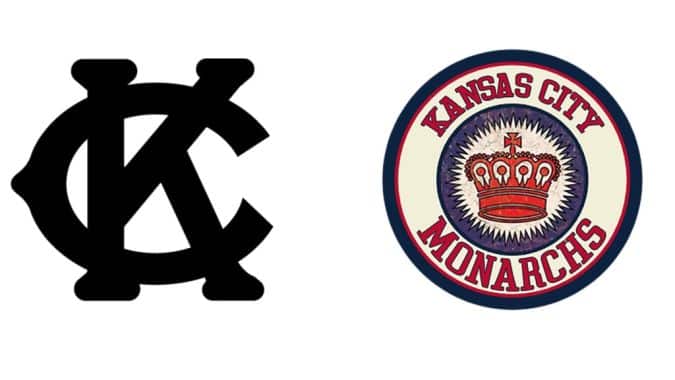
The Monarchs aren’t just any minor league team. The Kansas City Monarchs name traces directly to the legendary Negro League franchise that played from 1920 to 1965—a dynasty that produced Hall of Famers, shaped American sport during an era of segregation, and sent players to the integrated major leagues who changed the game forever. The modern club formally adopted the Monarchs’ name in 2020, partnering with the Negro Leagues Baseball Museum and retiring the previous T-Bones identity in an act of deliberate historical recognition.
“The history of the Monarchs and the legacy preserved by the Negro Leagues Baseball Museum are incredibly meaningful to me,” Studer said in the announcement.
That connection to place and legacy is a familiar theme for Studer, whose work transforming Pensacola’s waterfront through the Blue Wahoos and broader downtown investment has made him a recognized name in community-driven sports development.
The Original Monarchs: A Dynasty Built from the Ground Up
The original Kansas City Monarchs were founded in 1920 as a charter member of Rube Foster’s newly formed Negro National League—the first serious attempt to organize Black professional baseball into a sustainable circuit.
- From the start, the Monarchs were among the league’s elite, winning multiple pennants in the 1920s on the strength of disciplined, fundamentally sound play that earned them a reputation as one of the sport’s best-run organizations, regardless of league.
Their peak achievement came in 1924, when the Monarchs defeated the Hilldale Club to claim the first Negro World Series—Black baseball’s inaugural official world championship. Over the full span of their Negro League tenure, the club captured an unmatched ten pennants across both the Negro National League and, later, the Negro American League, and recorded only a single losing season across their entire run.
- When the original NNL collapsed during the Great Depression in 1931, the Monarchs survived by leaning on barnstorming tours—traveling the country to play anyone who would take the field. When the Negro American League reorganized in 1937, Kansas City was again a charter member and immediately won the first NAL title.
The Players Who Made the Monarchs Legendary
The roster assembled in Kansas City across four-plus decades reads like a who’s-who of baseball’s overlooked golden era. Bullet Rogan, a pitcher and slugger whose combination of dominance on the mound and at the plate was nearly without peer, anchored the early club. Hilton Smith was considered one of the best pitchers in all of baseball during his prime—a reputation largely invisible to white America at the time. Cool Papa Bell, one of the fastest players in the history of the game, and slugger Turkey Stearnes gave the lineup a fearsome quality that few teams in any league could match. All are enshrined in the Baseball Hall of Fame.
Andy Cooper, himself a Hall of Fame pitcher, managed the club in the late 1930s and early 1940s, guiding Kansas City to NAL pennants in 1937, 1939, and 1940—one of the most sustained runs of managerial success in the league’s history.
Perhaps no figure is more synonymous with the franchise than Buck O’Neil. A standout first baseman who later managed the club, O’Neil became one of baseball’s most beloved ambassadors, eventually serving as the first Black coach in the major leagues and devoting the latter decades of his life to preserving and celebrating Negro Leagues history.
The Team That Integrated Baseball
If one chapter of the Monarchs’ story rises above all others in terms of lasting American consequence, it is their role as the pipeline to the integrated major leagues. The franchise produced Jackie Robinson and Ernie Banks, among others—two players whose careers in the majors reshaped the sport and American culture.
Robinson played shortstop for the Monarchs in 1945. Those five months in Kansas City were pivotal: his performance brought him to the attention of Brooklyn Dodgers executive Branch Rickey, setting in motion the sequence of events that ended with Robinson breaking Major League Baseball’s color barrier on April 15, 1947—one of the most significant dates in American sports history. The Monarchs didn’t just develop Robinson as a ballplayer. They gave him the stage on which he was discovered.
How the Deal Came Together
According to the announcement, Studer made the first move—reaching out directly to Brandmeyer, who had built the Monarchs into a back-to-back championship organization within the American Association, an MLB Partner League.
“I would not be making this transition if not for Quint Studer,” Brandmeyer said. “His passion for community, his success in baseball ownership, and his track record of building meaningful, lasting organizations made it clear he is the right person to lead the Monarchs forward.”
Brandmeyer emphasized that the timing was right and the fit was deliberate—not a distressed sale but a succession built on shared values.
What Studer Is Inheriting
Quick Facts: KC Monarchs
- Member of the American Association (MLB Partner League)
- Play at Legends Field in Kansas City, Kansas
- 2026 marks their 23rd season at Legends Field
- Won two championships under Brandmeyer’s ownership
- Partnered with the Negro Leagues Baseball Museum since 2020
The franchise Studer is taking over is financially stable, community-connected, and competitive. Beyond the championships, Brandmeyer built a strong relationship with the Unified Government of Wyandotte County and Kansas City, Kansas—a public-private partnership that Studer says he intends to honor and continue.
Studer said one of his first priorities will be retaining the existing front office. “They are the heart of this organization, and we are excited to work alongside them to build on the success that’s already been achieved,” he said.
What It Means for Pensacola
Studer’s purchase of the Monarchs extends the reach of a sports ownership model that Pensacola has watched develop close to home. His work with the Blue Wahoos—the Double-A affiliate of the Miami Marlins—helped cement the argument that minor league baseball, done thoughtfully, can anchor civic identity and economic development simultaneously.
The KC Monarchs deal suggests Studer sees that model as exportable. With deep professional ties to the Kansas City region through his healthcare consulting work, the acquisition is both a business expansion and, by his own account, a personal one.
- “I have a deep affinity for the Kansas City area through both my professional work and personal relationships,” Studer said.
For Studer, the challenge now is the same one he took on in Pensacola more than a decade ago: show that baseball, community investment, and historical stewardship can all occupy the same dugout.