The New York Times reports that President Trump’s decision to end remote work for federal employees has forced VA (Veterans Affairs) mental health clinicians into crowded, public spaces that compromise patient privacy, including makeshift exam areas near bathrooms and shared conference rooms.
- LOCAL PROBLEM: While the problem is nationwide, sources have reported that the same cramped conditions exist at the VA facility in Pensacola. Workers reported to work at the clinic on Monday, April 1, and found insufficient offices and desks. Clinicians struggle to maintain confidentiality despite makeshift solutions like privacy screens and headphones.
NYT: V.A. Mental Health Care Staff, Crowded into Federal Buildings, Raise Patient Privacy Alarms
In South Florida, psychiatric nurses treat veterans with mental health conditions in a makeshift medical bay constructed from filing cabinets and screens—located directly beside a bathroom in a busy hallway. In Kansas City, VA staff discuss sensitive patient care while sitting across narrow cafeteria tables. Boston clinicians must share a single room for conducting all their telehealth appointments.
Bill Frogameni, a psychiatric nurse in Miami, describes asking suicidal veterans extremely personal questions about self-harm in settings where anyone passing by can overhear. Veterans have noticed the lack of privacy and are becoming reluctant to discuss sensitive topics like substance abuse, legal issues, and intimate partner violence.
VA officials defend the policy, dismissing concerns from a “small but vocal minority” while arguing that in-office work improves veteran care. Yet the photographs and testimonies reveal clinicians attempting to maintain privacy with headphones, privacy screens, and even convex mirrors in open office spaces—creative but inadequate solutions to a systemic problem. Read more.
PENSACOLA
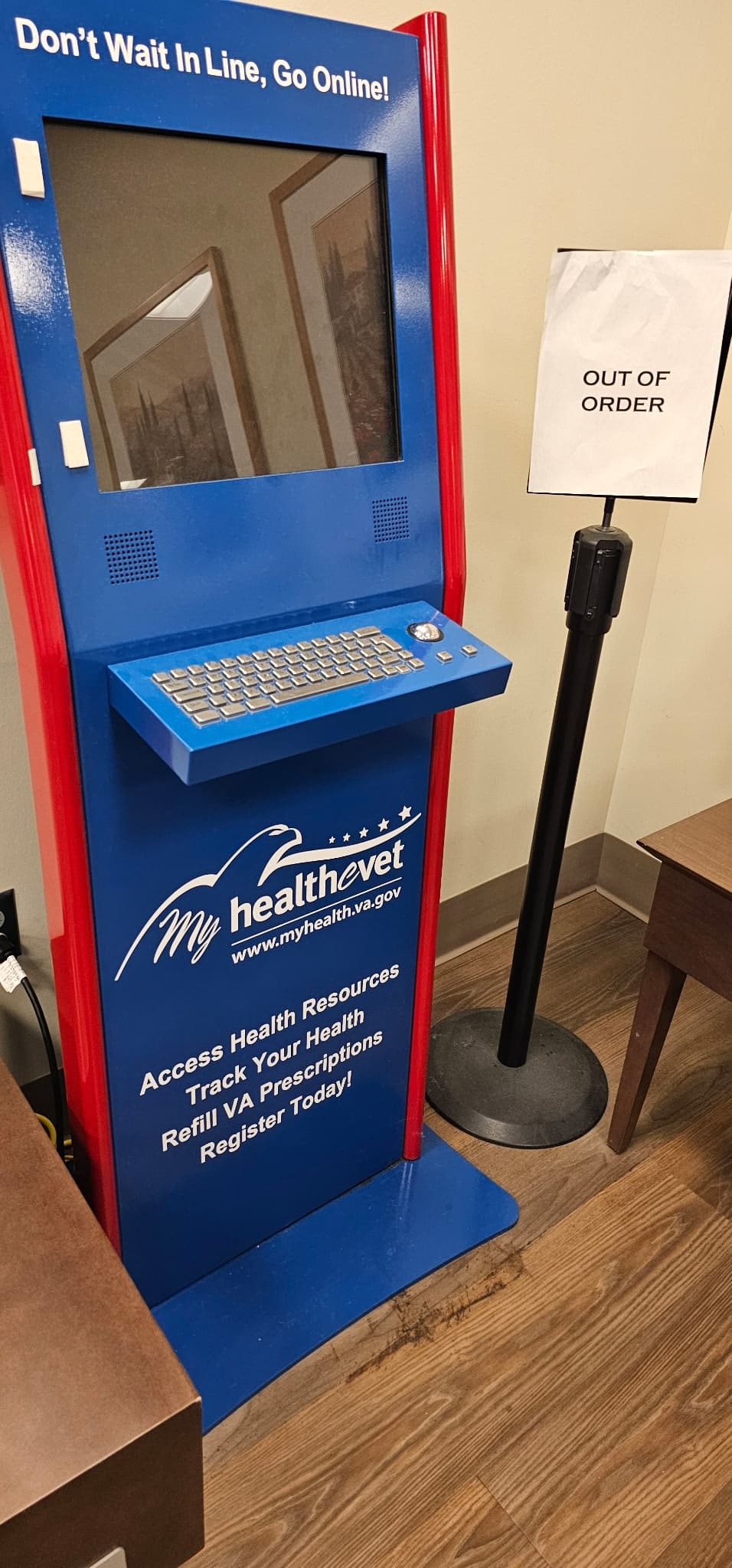
The Pensacola VA Gulf Coast Health Care Clinic is located next to the Navy Hospital on Highway 98. The Pensacola clinic offers a comprehensive range of outpatient mental health services, including consultation, evaluation, and treatment for conditions such as depression, anxiety, PTSD, bipolar disorder, schizophrenia, and substance use disorders.
- Sources say that the metrics show that, though its mental health clinicians have worked remotely for years, the Pensacola clinic is one of the busiest VA clinics in the country.
Overcrowded: We have been told the facility has never had enough office space to house all its mental health clinicians. Many always worked remotely; some have never worked physically at the clinic. Since they reported to work at the clinic on April 14, many have set up workstations in the building wherever possible. They sit on folding chairs at tables with five others, serving patients online via the VA Telehealth system.
A clinician shared:
“The building is not equipped for all of us to be there.”
- A running joke inside the VA is that by the time a VA clinic is built, it’s already 50% smaller than it needs to be.
Privacy: The headphones provide some sense of privacy, but patients can hear the buzz that has been described as similar to what one hears in the background when receiving a call from a call center.
Since everyone in the room falls under HIPAA, VA supervisors have said the rooms are “HIPAA compliant.” Workers have been told the conversations don’t infringe on the patient’s right to privacy.
-
- HIPAA stands for the Health Insurance Portability and Accountability Act of 1996. It is a U.S. law designed to protect sensitive patient health information and ensure the portability of health insurance coverage.
However, sources have said the crowded work areas are a “very distracting environment.”
“It’s a very hard environment to work in when phones are ringing and people are on calls and lots of noise is going around, and it’s not efficient.”
SERIOUS ISSUE
The National Association of Social Workers (NASW) has raised significant concerns about workforce reductions and a new return-to-office mandate affecting VA social workers, warning that these changes could compromise care for millions of veterans.
- In a letter dated April 11, 2025, to Secretary of Veterans Affairs Douglas A. Collins, NASW CEO Anthony Estreet detailed how the VA’s plan to reduce its workforce by approximately 10,000 full-time positions — representing 2% of total VA employees — will predominantly impact medical care sites where social workers serve. Additionally, the VA has already dismissed over 1,000 employees in February and more than 1,400 probationary employees later that month, redirecting $181 million annually to health care and benefits.
Of particular concern is VA’s abrupt return-to-office mandate that rescinded all telework agreements, forcing social workers into shared office spaces that lack adequate privacy for therapeutic sessions. NASW reports that these arrangements may violate HIPAA regulations and compromise confidentiality as providers risk overhearing conversations or viewing protected health information on screens.
The timing is critical, as social workers have been integral to VA operations since 1926, providing mental health care, crisis intervention, and support to the nation’s 18 million veterans. The VA operates nearly 200 PTSD treatment centers, and veteran households comprise 11% of all U.S. households, underscoring the vital role of these professionals.
NASW has requested VA pause the return-to-office order, ensure proper office accommodations for confidential care, maintain adequate staffing levels for veteran services, and engage in collaborative planning to preserve service quality.
Read NASW VA Letter