
State Budget / Accountability
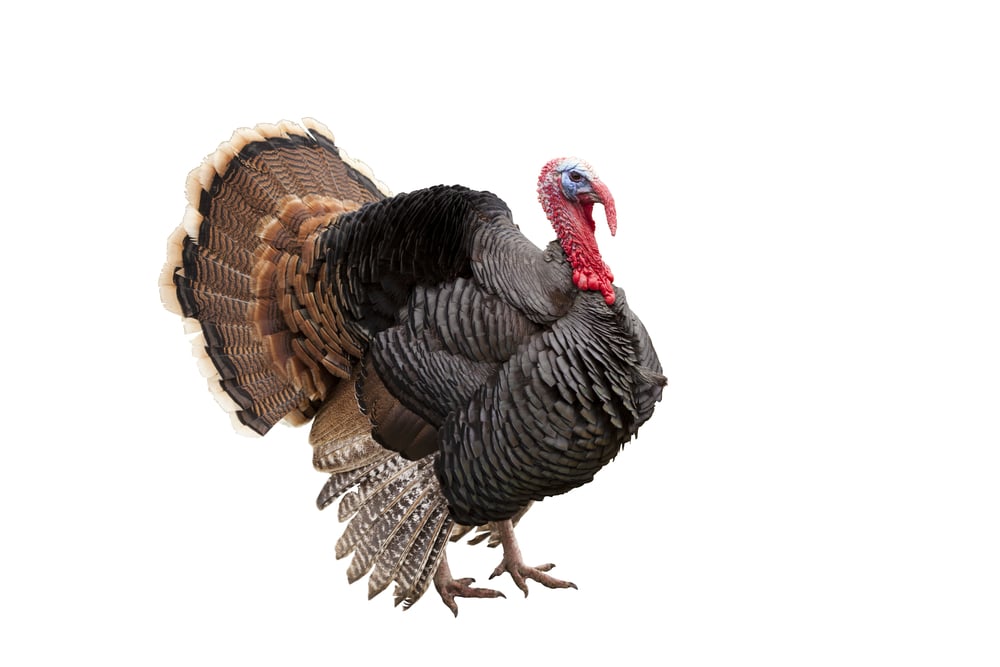
Florida TaxWatch Flags $829 Million in Budget Turkeys—Including Local Projects
A new watchdog report finds 621 questionable appropriations in the FY2026-27 state budget, with the University of West Florida, Pensacola State College, and a Santa Rosa County heritage project on the list.
Florida TaxWatch has released its 2026 Budget Turkey Watch Report, identifying 621 appropriations totaling $829.7 million in the new $114.7 billion state budget that bypass established review processes, lack competitive selection, or violate the Legislature’s own budgeting rules. An additional 484 projects worth $441.1 million, while not formally designated as Budget Turkeys, warrant close gubernatorial review before the budget takes effect. Read 2026-Budget-Turkey-Watch-Report.
“It has proliferated. In my view, it’s a problem. I mean, 2,000 member projects are in this budget. That’s incredible. Every year, we are looking more and more like Congress. It’s just spend, spend, spend.”
— Jeff Kottkamp, Florida TaxWatch President and CEO, former Lieutenant Governor
Northwest Florida on the List
Three local projects are among the flagged appropriations this cycle:
- University of West Florida—Critical Infrastructure, Satellite Utilities Plant: $8 million. The project was funded despite not appearing on the Board of Governors’ priority list.
- Pensacola State College—South Santa Rosa Health Science & Nursing Building: $5 million. Similarly bypassed the statutory college construction priority ranking process.
- Panhandle Heritage Village of the 1800s (Santa Rosa County): $225,000. A member project funded without competitive selection criteria.
The Budget Turkey designation does not mean these projects lack merit. TaxWatch is explicit that it is not recommending the Governor veto any specific item on the list. The flag signals that funding bypassed the transparent, competitive process taxpayers are owed.
Austerity Rhetoric, Record Spending
Lawmakers opened the 2026 session under a stated mandate for fiscal restraint, with state economists projecting future General Revenue shortfalls. For the second consecutive year, the Legislature failed to pass a budget within the 60-day regular session—one of six special sessions held over the past two years—and ultimately resolved a $1.4 billion House-Senate gap before the spending plan was finalized.
- Despite that backdrop, legislators submitted more than 5,600 member project requests totaling $12.5 billion—surpassing last year’s record of 5,100 requests worth $11.7 billion. Nearly 2,000 of those projects, worth more than $2.7 billion, were ultimately funded. With 160 members in the Legislature, that averages to 12.5 projects and $16.7 million per legislator, extending a five-year run in which approximately $14 billion in member projects have been appropriated.
How the Process Gets Bypassed
Budget Turkeys appear across nearly every area of the budget where formal review processes exist:
- Higher education construction: 11 university projects ($76.8 million) and 11 college projects ($71.7 million) received funding despite not appearing on statutorily required priority lists, while some of the highest-ranked projects went unfunded.
- Water quality: For the second consecutive year, the Legislature earmarked all $380 million in Water Quality Improvement Grant Program funding for 344 individual member projects using the implementing bill to override the competitive, criteria-driven process it had created.
- Local parks, historic preservation, cultural facilities, and library construction all followed the same pattern—established grant programs underfunded or bypassed entirely in favor of member-requested projects.
- Transportation: Local transportation projects were again funded overwhelmingly through the State Transportation Trust Fund rather than General Revenue, undermining the DOT Work Program.
What TaxWatch Is Recommending
Florida TaxWatch is urging the Governor to use his veto authority with these findings in mind, evaluating each flagged project for its alignment with core state functions, the recipient’s capacity to secure local or private funding, and whether it followed sound budgeting practice.
For the Legislature, the report calls for structural reform:
- Establish statutory competitive selection processes for member projects in transportation, housing, law enforcement, fire service, and emergency management.
- Adhere to the Water Quality Improvement Grant Program process the Legislature itself enacted.
- Discontinue or sharply curtail supplemental “sprinkle list” appropriations.
- Enact follow-up audit requirements for randomly selected appropriations—a reform the House has proposed for three consecutive sessions that the Senate has yet to adopt.
The Budget Turkey Watch Report has been published annually since 1983. In a year defined by public calls for spending discipline, TaxWatch concludes that the gap between that stated priority and the actual budget has rarely been wider.
The 2026 Budget Turkey Watch Report was authored by Kurt Warner and Bob Nave, Senior Vice Presidents of Research; Brandi Gunder, VP of Research; Jessica Cimijotti-Little, Research Analyst; and Garrett Gouveia, Research Economist.