Sailing
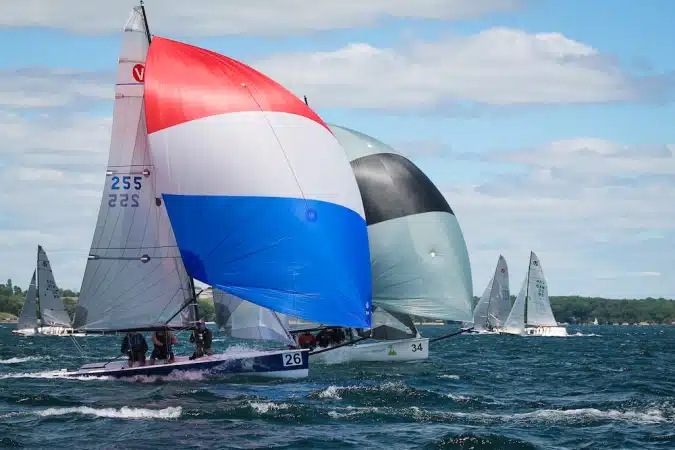
Pensacola’s push to become the sailing capital of North America adds another big date to the calendar. The Viper 640 North American Championship, the biggest event on the Viper 640 International Class Association’s calendar, sails into Pensacola Bay Sept. 30 through Oct. 4. Racing begins Thursday, Oct. 1, and 38 boats are registered, Tom Pace told Rick’s Blog Live.
- Pace is Pensacola Yacht Club’s Viper Regatta Chair. He said only six boats come from the Gulf Yachting Association, the regional circuit that stretches from Clearwater to Texas. The other 32 are visitors, including teams from Canada and across the U.S.
A Boat Built for Crew Work
One-design racing. The Viper 640 is a 21-foot sports boat built for two to four sailors, and Pace described it as a three-person performance boat. Every boat is built to strict class specifications, and sails are the main variable the rules allow. That puts the emphasis on the sailors, not on differences in boat design.
- Not a foiler. It is not the kind of foiling machine American Magic sails out of Pensacola, but Pace said it rewards the same things: crew work and boat speed.
- Light air or heavy air. The boat can start sailing in only 3 to 4 mph of wind. When the breeze builds to 12 to 20 knots, Pace said, sailors are holding on to a bucking bronco while the boat flies.
“As the breeze builds, the boat becomes a handful, which puts even more emphasis on the crew’s ability to read the conditions and make the right decisions.”
- Small crew, big stakes. Larger boats, such as the TP52s that have raced here, carry 11 sailors. On a Viper, a handful of people do the same job on a smaller scale, so mistakes and gains are both magnified. That usually produces very tight finishes.
- Everyone at once. The regatta uses a full-fleet start. All 38 boats leave the line together, which is standard for most sailing regattas. Pace noted that even SailGP now limits the number of boats on the water because of the closure rates at those speeds.
The Racing Schedule
This is a closed-course event. Race officials set a start line, one mark upwind and one downwind. Each race is a two-lap course, and the first boat across the finish wins. The fleet races as a single class on the bay southeast of the entrance to Bayou Chico.
- Thursday, Oct. 1: First warning signal at 2 p.m.
- Friday and Saturday: Racing begins at 11 a.m.
- Sunday: Racing begins at 10 a.m., followed by the awards ceremony
How many races. The preliminary schedule allows up to five races a day, weather permitting. Pace said to expect at least eight over the series and as many as 12 if conditions cooperate. Each sailor gets to discard the single worst finish after four races, which keeps the standings tight. A boat can win the first race by a mile and still be in a scramble by the end.
- Tactics matter. Pace said sailors will be reading wind shifts as breeze comes around downtown, past the Bay Bridge and through Gulf Breeze, along with the current. Trim and boat setup matter too, much like the adjustments a Formula One team makes on its cars. Once boats are side by side, it becomes a head-to-head game of squeezing out every half-knot.
If You Go
- What: Viper 640 North American Championship
- When: Sept. 30 through Oct. 4, with racing Thursday, Oct. 1, through Sunday, Oct. 4
- Host: Pensacola Yacht Club, 1897 Cypress St.
- Fleet: 38 boats registered (6 from the Gulf Yachting Association, 32 visitors)
- Format: Full-fleet starts on a two-lap closed course, up to five races a day
- More info: Schedule, registration and race documents at pensacolayachtclub.org