College Sports & NIL
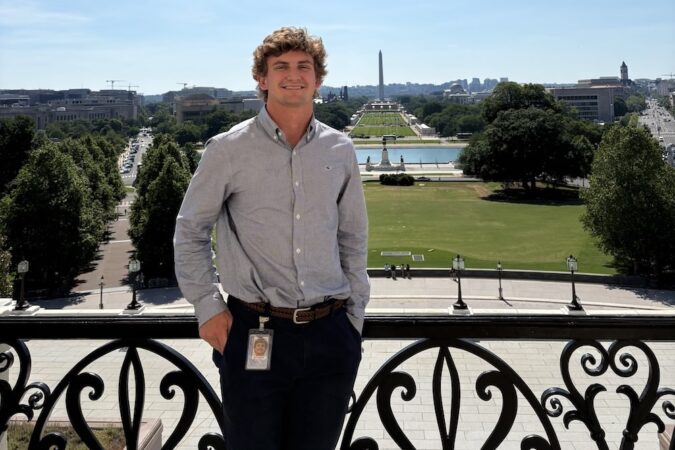
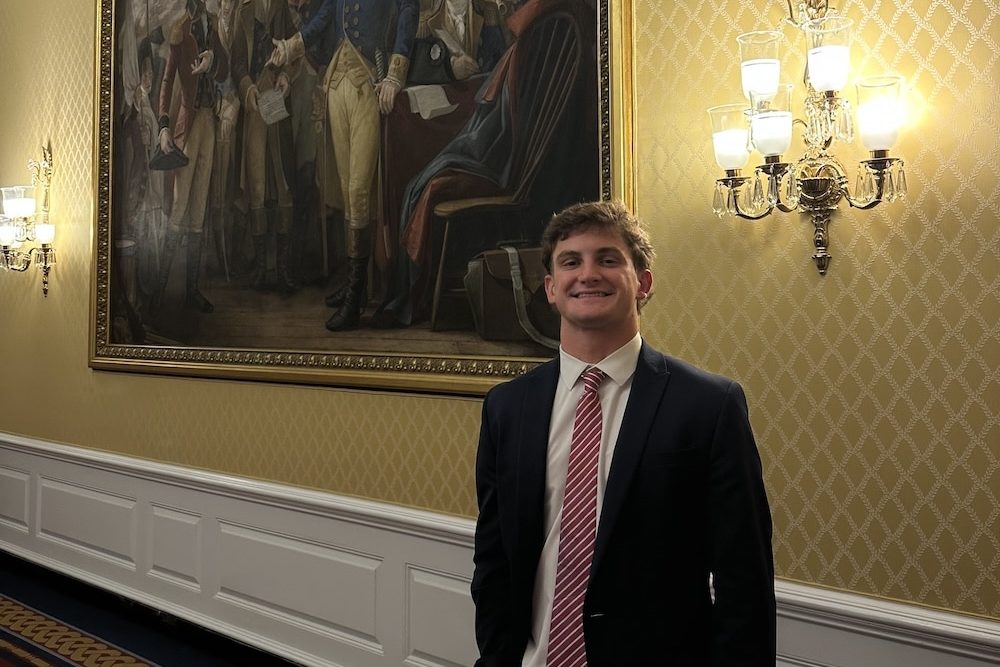 Liam “Lumpy” DeWeese, a senior finance major and football player at the University of West Florida, is in Washington, D.C. today to take part in a press conference backing the Protect College Sports Act, the bipartisan bill drafted by Senate Commerce Committee Chairman Ted Cruz (R-Texas) and Ranking Member Maria Cantwell (D-Wash.). DeWeese also put his case in writing, sending Inweekly a personal essay on why he believes the legislation is overdue.
From Stetson to UWF, By Way of the Transfer Portal
DeWeese didn’t start out as a UWF Argonaut. He played two years of Division I football at Stetson University before the coaching staff that recruited him was let go. He entered the transfer portal and came home, landing at what was then a Division II UWF program.
- That firsthand experience shapes his read on the bill. He supports the transfer portal as a tool athletes sometimes genuinely need—which he used—but argues the current free-for-all has gone too far.
“Unrestricted free agency every offseason has created pandemonium for programs trying to maintain their rosters.”
What the Bill Would Actually Do
The legislation reaches well beyond the headline NIL deals that dominate coverage of college sports. According to DeWeese and the bill’s authors, the Protect College Sports Act would:
- Establish a national framework for NIL compensation, replacing today’s patchwork of state laws and NCAA rulings
- Set reasonable guardrails and caps on the transfer portal, rather than eliminating it
- Extend healthcare coverage for college athletes after their playing careers end
- Bar professional athletes from returning to college rosters
- Protect women’s and Olympic sports programs from being cut
Not Just a Power 4 Problem
DeWeese is careful to note that most college athletes never see a lucrative NIL check. By his own account, the financial benefit he’s received for playing has amounted to a few hundred dollars a semester toward books—a reality he says is far more common across college sports than the seven-figure deals that make news.
- That’s part of why the bill’s healthcare and scholarship protections matter most to him personally. Injuries sustained on the field, he writes, have effects that outlast a playing career, and lower-division athletes like himself are rarely the ones benefiting from the current chaos.
His Viewpoint
College Football is Changing. Congress Must Protect What Makes It Special.
Passing legislation to protect college athletics has never been more important. I realized the extent of that in June, when I was fortunate enough to hear Coach Nick Saban, arguably the greatest coach in the history of college football, testify before the Senate Commerce Committee and urge lawmakers to pass the Protect College Sports Act.
Coach Saban focused his testimony on the importance of establishing a consistent national framework to end the current era of differing waivers and local rulings that has created uncertainty throughout college athletics. Since then, he has continued to call for timely action, especially in light of recent cases involving professional athletes returning to college football.
The bipartisan Protect College Sports Act was drafted by Senate Commerce Committee Chairman Ted Cruz (R-Texas) and Ranking Member Maria Cantwell (D-Wash).
At a time when Congress can’t seem to agree on much, the bipartisan nature and broad support of this bill speak volumes about the urgency of the problem and why it must be passed.
Playing college football has made an indescribable impact on my life. I wasn’t a highly recruited prospect out of high school, and I enrolled at Stetson University to play Division I non-scholarship football for two years. Non-scholarship football was such a neat experience. The workload and commitment levels were the same as anywhere else, but we were all doing it purely out of love for our sport.
After the coaching staff that recruited me was let go, I entered the transfer portal and transferred home to play for the then Division II University of West Florida.
As someone who has personally been in the transfer portal, I was happy to hear that the Protect College Sports Act protects athletes’ ability to do so but also establishes reasonable guardrails and caps. There are absolutely cases where leaving a school is needed. I experienced it myself. But unrestricted free agency every offseason has created pandemonium for programs trying to maintain their rosters.
The lucrative NIL deals that people often think of when they hear about college sports are not the reality for the vast majority of college athletes. The extent of financial benefit I have received while playing college football has been a few hundred dollars a semester to help cover the cost of books.
Contrary to what dominates the headlines, NIL itself is not the issue. I wholeheartedly believe that college athletes should be able to make an income from their name, image, and likeness if people are willing to pay them. But the lack of consistent guidelines has led to unsustainable bidding wars between schools offering seven-figure salaries.
The Protect College Sports Act would establish federal protections for athletes’ NIL rights, scholarships, and healthcare. The healthcare aspects are particularly important to me, and probably to many other lower-division athletes who are not directly affected by the multimillion-dollar NIL deals. The injuries we sustain and the lingering effects last long after our playing careers end. The Protect College Sports Act recognizes that reality and provides extended coverage for athletes after graduation.
This legislation will also stop professional athletes from returning to college athletics. As an athlete myself, I know firsthand how critical this provision is for both safety and preserving what makes college sports different. In no world is it safe or fair for a 28-year-old professional athlete to be on the same field as an 18-year-old freshman, and it is disheartening to see anyone making an argument against that.
Additionally, the protections for women’s and Olympic sports are crucial. Nonrevenue sports are just as important and should be shielded from the potentially devastating effects of the current system.
College athletics are far bigger than Power 4 football. Hundreds of thousands of young people choose to take a harder route of early morning workouts, long preseason camps, classes, practices, travel, and all of the other sacrifices that come with it – often without receiving significant financial benefit or recognition. This is my story, and I know it’s also the story of many others.
The Protect College Sports Act isn’t about choosing athletes over universities, or universities over athletes. It is about recognizing that both need clear rules to continue to provide the most opportunities possible for students.
College athletes deserve the right to earn money from their name, image, and likeness if the opportunity presents itself. They also deserve scholarships, healthcare protections, and a fair opportunity to compete.
As someone who has lived college football in one of its purest forms, I hope our leaders remember that college athletics are supposed to provide every student athlete with the opportunity to compete, earn an education, and become something greater than the student you were when you arrived.
Let’s protect that opportunity.
Congress, pass the Protect College Sports Act.